

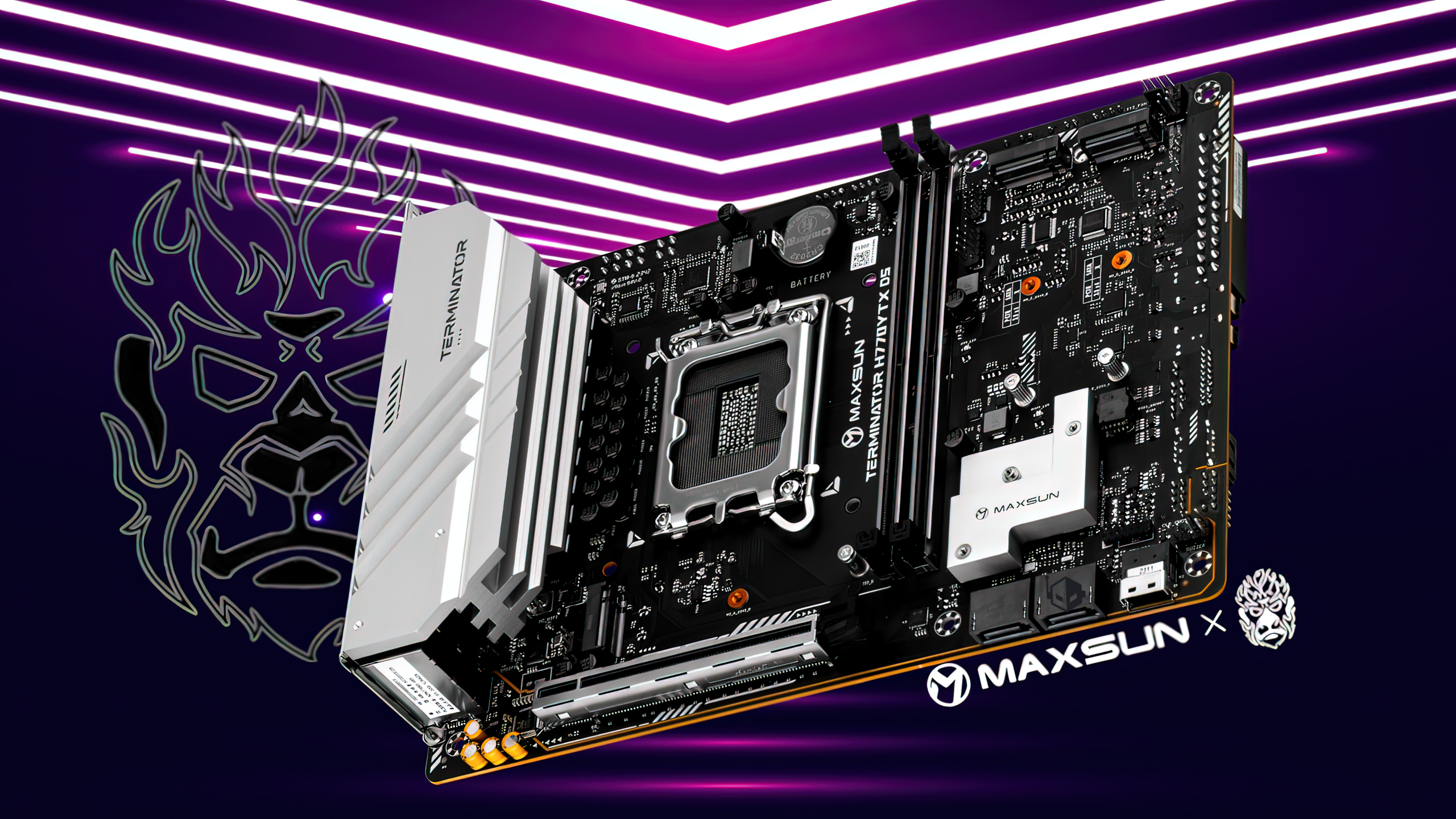
For decades, PC builders have worked within the familiar motherboard sizes of ATX, micro-ATX, and mini-ITX, with each size balancing PCIe expansion, RAM capacity, and compactness. But Maxsun, a hardware maker based in China, is attempting to shake up that formula with a brand-new standard: YTX. Unlike ITX, which squeezes everything into the smallest possible footprint, YTX reimagines how space is used, prioritizing M.2 storage expansion and cable management for modern small-form-factor builds.
The first YTX board, the MS-Terminator H770, illustrates this concept clearly. At 245mm x 175mm, it’s the same length as mini-ITX but adds 75mm in width. That extra real estate translates into four M.2 slots (three openly accessible, one stacked), ensuring builders can pack in terabytes of fast SSD storage. While all of them run at PCIe 4.0 speeds rather than PCIe 5.0, it’s still far more flexible than the two-slot setups typical of ITX boards. Other features include Wi-Fi 6, Bluetooth 5.2, and a full PCIe 5.0 slot reserved for a discrete GPU.
Equally interesting is Maxsun’s decision to move most of the connectors—power, SATA, and more—to the back of the board. This mirrors a broader industry trend seen in designs from ASUS and MSI, where cable routing behind the tray improves airflow and aesthetics. For SFF enthusiasts, who often battle tight spaces and messy layouts, this could be a game-changer.
Still, new form factors face an uphill climb. Case manufacturers will need to accommodate YTX before it can gain any traction, and for now, that means relying on micro-ATX enclosures that just happen to fit. Whether YTX becomes a real alternative or a niche curiosity will depend on how quickly the ecosystem adapts. But with demand for small, powerful, and storage-rich PCs on the rise, Maxsun may have identified a pain point that the standard ATX/ITX options have long ignored.