


Microsoft, modern software is built on APIs. Where applications once lived as large, self-contained systems, today’s cloud-native architectures are composed of many small services connected through well-defined interfaces. These APIs handle everything from business logic to data access, making it possible to scale applications on demand and improve resilience when infrastructure fails.
While this model benefits operations, it introduces new challenges for development teams. Agile practices encourage parallel work across multiple services, but those services are rarely completed at the same time. A front-end feature may be ready for testing while a dependent backend service is still under construction, or it may rely on an external API that is expensive or impractical to call during development.
To keep progress moving, teams often turn to mocks — stand-ins that imitate real services. However, creating and maintaining custom mocks can be nearly as time-consuming as building the services themselves. What developers really need is a reusable, flexible layer that sits between client and server, integrates smoothly into existing workflows, and can evolve alongside the application.
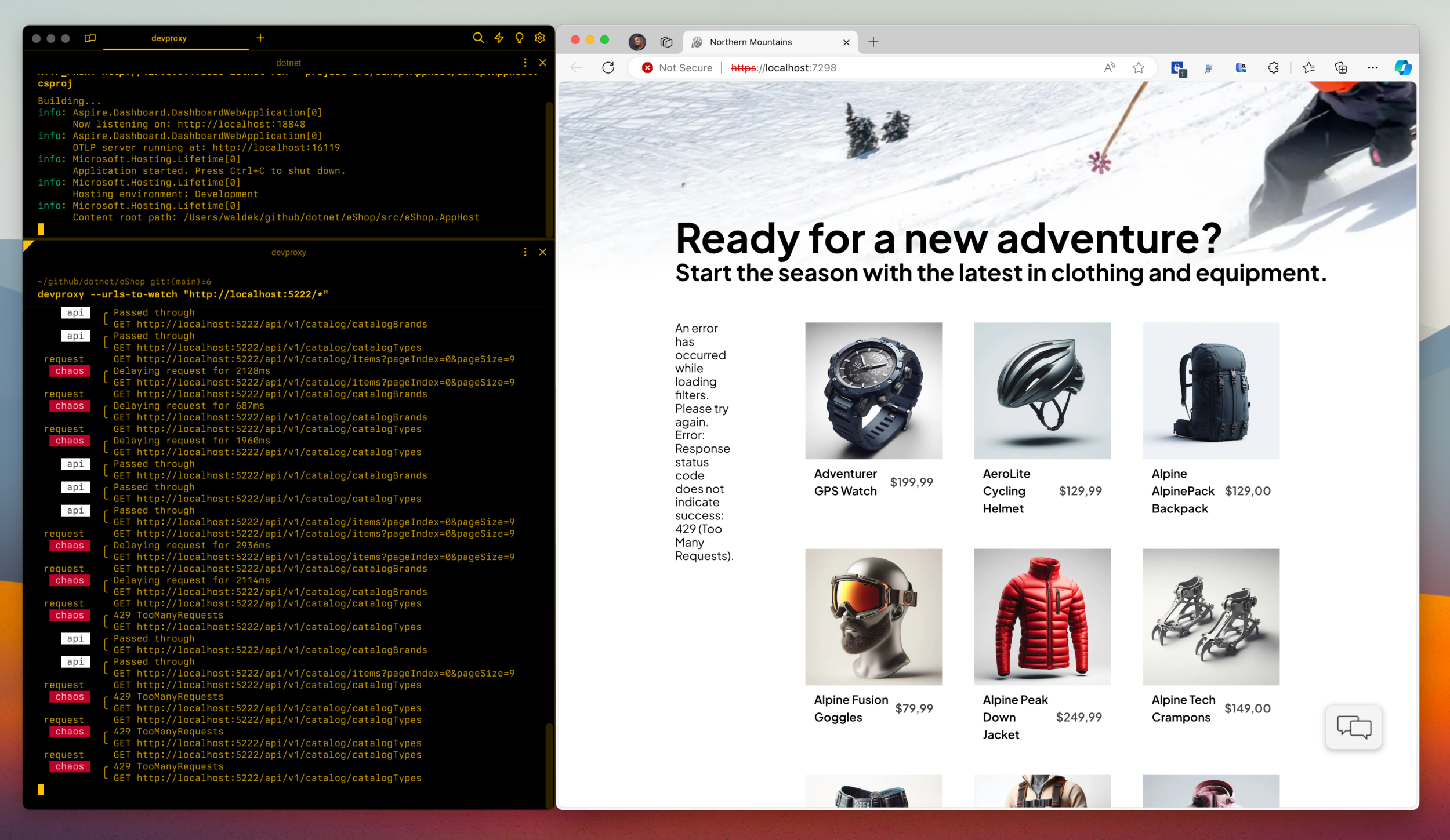
This is where API simulators and proxies come into play. By intercepting network traffic, these tools can return expected responses, emulate error conditions, and model behaviors such as rate limiting or authentication failures. If an API specification exists, a simulator can often generate realistic responses automatically, eliminating the need for handcrafted mocks or early commitments to third-party subscriptions.
Beyond simple simulation, a proxy-based approach allows teams to test against live services while still retaining control. Developers can inject faults, experiment with edge cases, and observe how their code behaves under stress — all without disrupting production systems. The result is faster iteration, better test coverage, and a smoother path from development to deployment.