

Lenovo arrived at CES 2026 with a broad refresh of its Legion gaming lineup, emphasizing variety rather than centering the entire showcase around a single ultra-premium machine. The strategy appears aimed at covering a wider range of gamers, from competitive players and creators to students entering the PC gaming space. That said, Lenovo still managed to steal the spotlight with one eye-catching concept that felt equal parts impractical and fascinating.
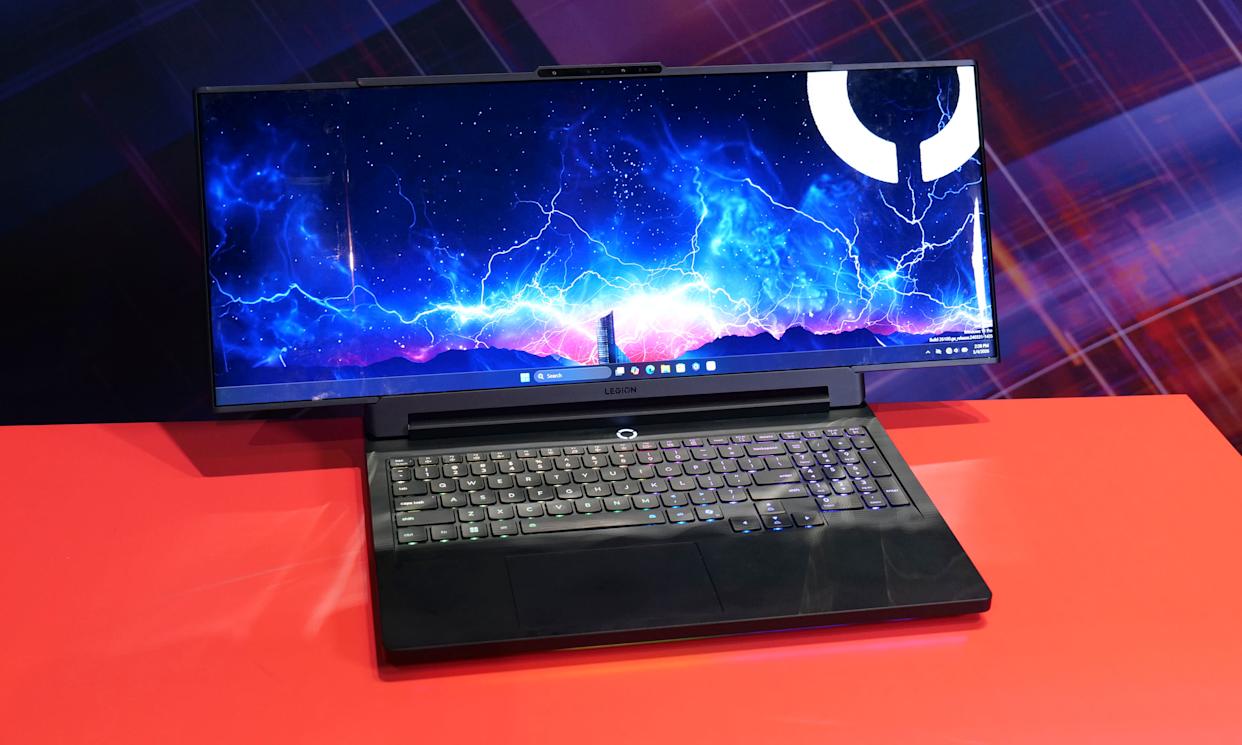
The standout concept is the Legion Pro Rollable, a gaming laptop built around a physically expanding OLED display. In its default state, the system looks like a conventional 16-inch gaming laptop, but the screen can roll out vertically to 21.5 inches or extend fully to a massive 24 inches. Lenovo says the idea is tailored for esports players who are accustomed to training on large monitors but still want a portable system. Under the hood, the concept is based on the Legion Pro 7i platform and pairs Intel’s latest Core Ultra processors with an RTX 5090 Laptop GPU, firmly placing it at the extreme high end of mobile gaming performance.
Beyond the concept hardware, Lenovo’s production lineup also received meaningful updates. The Legion 7a has been redesigned to be thinner and lighter than last year’s model while switching to AMD’s new Ryzen AI 400 processors. These CPUs are paired with Nvidia GeForce RTX 50-series graphics capable of delivering up to 125W of power. Lenovo positions the Legion 7a as a hybrid machine, suitable not only for gaming but also for demanding workloads such as programming, 3D rendering, and creative production.
The Legion 5 series sits just below the 7-series and represents Lenovo’s mainstream gaming offering. Buyers can choose between Intel or AMD processors, but both configurations retain RTX 50-series GPUs and OLED displays. Lenovo also includes its AI Engine+ software, which dynamically adjusts performance, power, and thermal behavior depending on workload, allowing users to balance frame rates, noise, and battery life more precisely.
Rounding out the lineup is the LOQ series, which targets students and first-time gaming PC buyers. These systems are designed to be more affordable and less complex, while still offering enough performance to handle modern games at reasonable settings. Lenovo is positioning LOQ as an entry point into PC gaming rather than a compromise-heavy budget option.
Pricing reflects Lenovo’s tiered approach. LOQ models start at $1,149, while most Legion systems land between $1,499 and $1,999. Lenovo expects the refreshed lineup to begin shipping in spring 2026.