

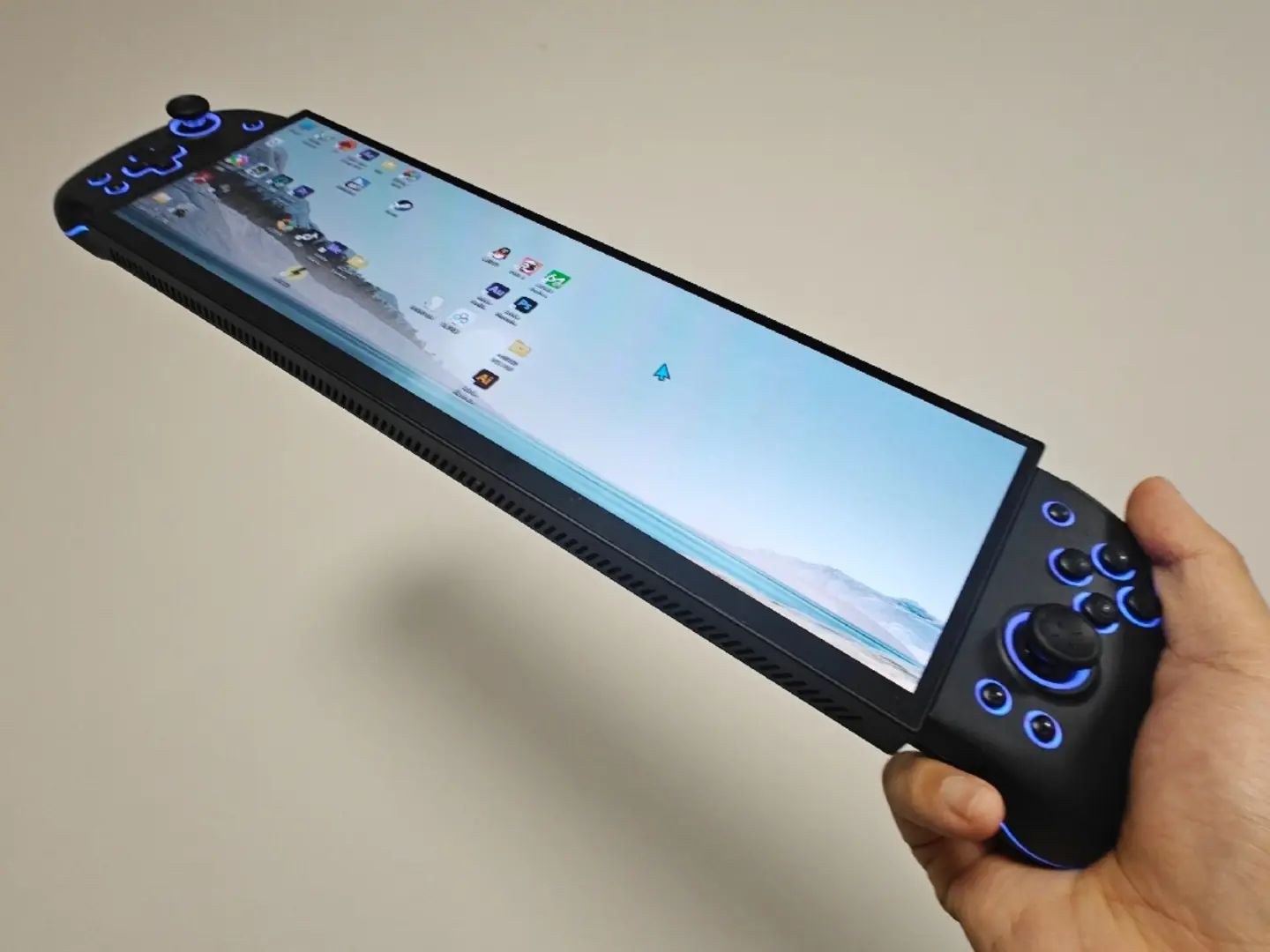

I’ve always had a soft spot for ultrawide monitors, the kind of screens that stretch gaming and productivity into something almost cinematic. At the same time, I’ve resisted the urge to jump into handheld gaming PCs ever since the Steam Deck made them mainstream. That changed — at least in spirit — when I stumbled across a YouTube video showcasing a completely custom 32:9 handheld with detachable controllers. The concept looks absurd, yet strangely perfect, as if it had been designed specifically to tempt me into handheld territory. The only saving grace is that it isn’t a commercial product, so I can’t actually buy one even if I wanted to.
The creator behind the video, going by “𝙉𝙄𝙏𝕋ℝ𝐗,” claims the handheld is powered by AMD’s Ryzen Z2 Extreme, a processor so new and scarce that it typically only appears in expensive machines like MSI’s Claw A8 BZ2EM. That claim is hard to swallow, since it would require dismantling a $1,000+ handheld just to repurpose the chip. The video footage itself doesn’t do much to dispel doubt, as the first game shown is Asphalt 9 — a title that runs smoothly on regular mobile devices, raising the possibility that the system on display isn’t as exotic as it seems. Given how common it is to fake or exaggerate prototypes in the gaming and gadget world, skepticism feels justified.
Even so, the hardware design is fascinating. The central unit appears to house a custom-fitted ultrawide touchscreen with room for internal components, essentially mashing together handheld ergonomics with monitor-style spectacle. From a user experience standpoint, though, the practicality is questionable. Most PC games don’t natively support 32:9 resolutions, meaning you’d either have to deal with letterboxing, stretched visuals, or endless tweaking to get things playable. Throw in the issues of heat, battery drain, and sheer weight, and the concept seems more like a passion project than a usable device.
Still, I can’t help but admire the creativity. Handheld gaming has always stretched the definition of “portable,” and this design takes that philosophy to its logical extreme. Whether or not the video is authentic, it highlights the willingness of enthusiasts to push form factors into territory that major manufacturers wouldn’t dare. In its own way, it carries forward the philosophy that bigger (or in this case, wider) can always be better — even if it’s wildly impractical.