

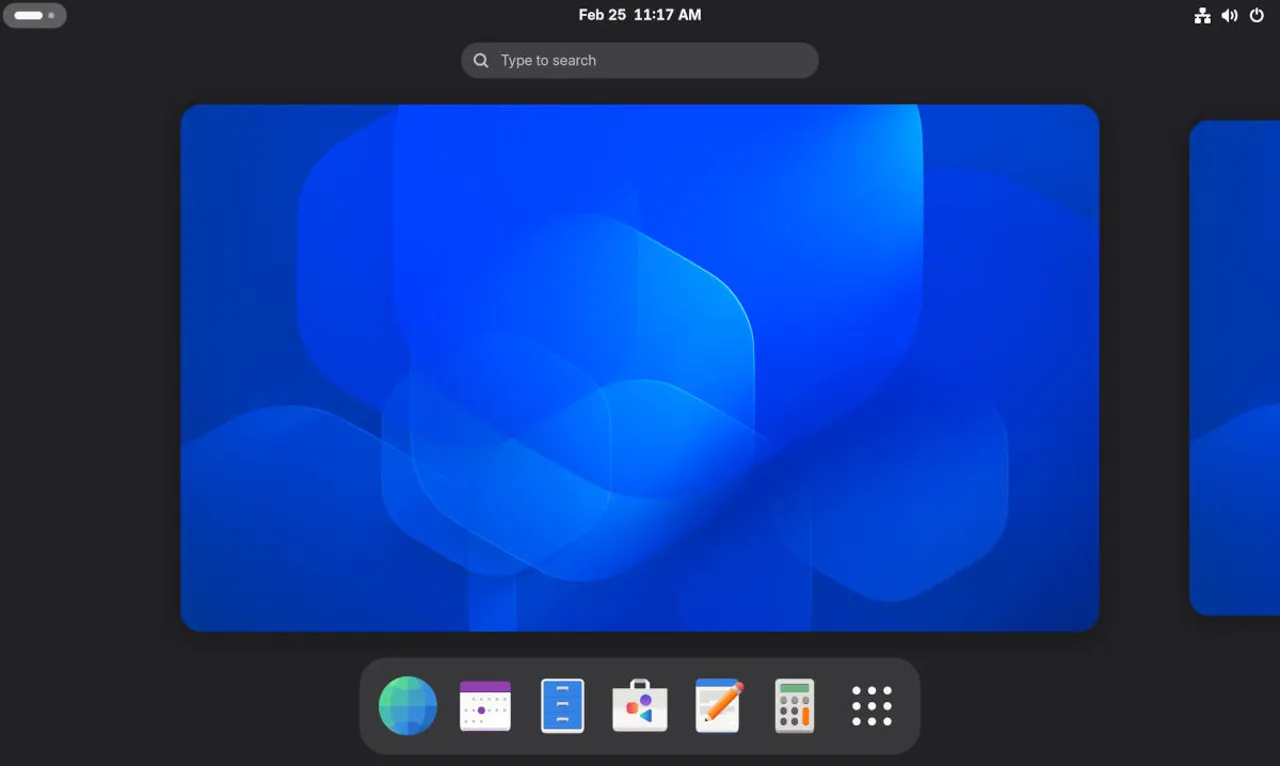

GNOME has always been known for its consistency, and GNOME 50 continues that tradition while quietly introducing some meaningful improvements. The core GNOME Shell remains familiar, giving users a stable and predictable desktop environment that feels comfortable and reliable.
One of the most significant changes in GNOME 50 happens under the hood. The update officially removes X11 support in favor of Wayland, marking a shift toward a more modern and secure display protocol. Wayland not only improves performance but also enhances security, offering a smoother experience for both everyday tasks and more demanding workloads.
Gamers and professionals will notice subtle but important enhancements. GNOME 50 introduces VRR support for smoother gaming, better handling of discrete GPUs, and a new thumbnail widget that is far faster than its predecessor. Users will also benefit from case-sensitive path completion in the file manager and improved search functionality, making navigation quicker and more intuitive.
Accessibility and usability have also been refined. A new text size slider in the accessibility panel allows for easier reading, battery charge management has been improved, and symbolic icons have been updated for a cleaner, more modern look. Together, these upgrades make GNOME 50 a release that balances familiarity with meaningful, user-friendly improvements.