

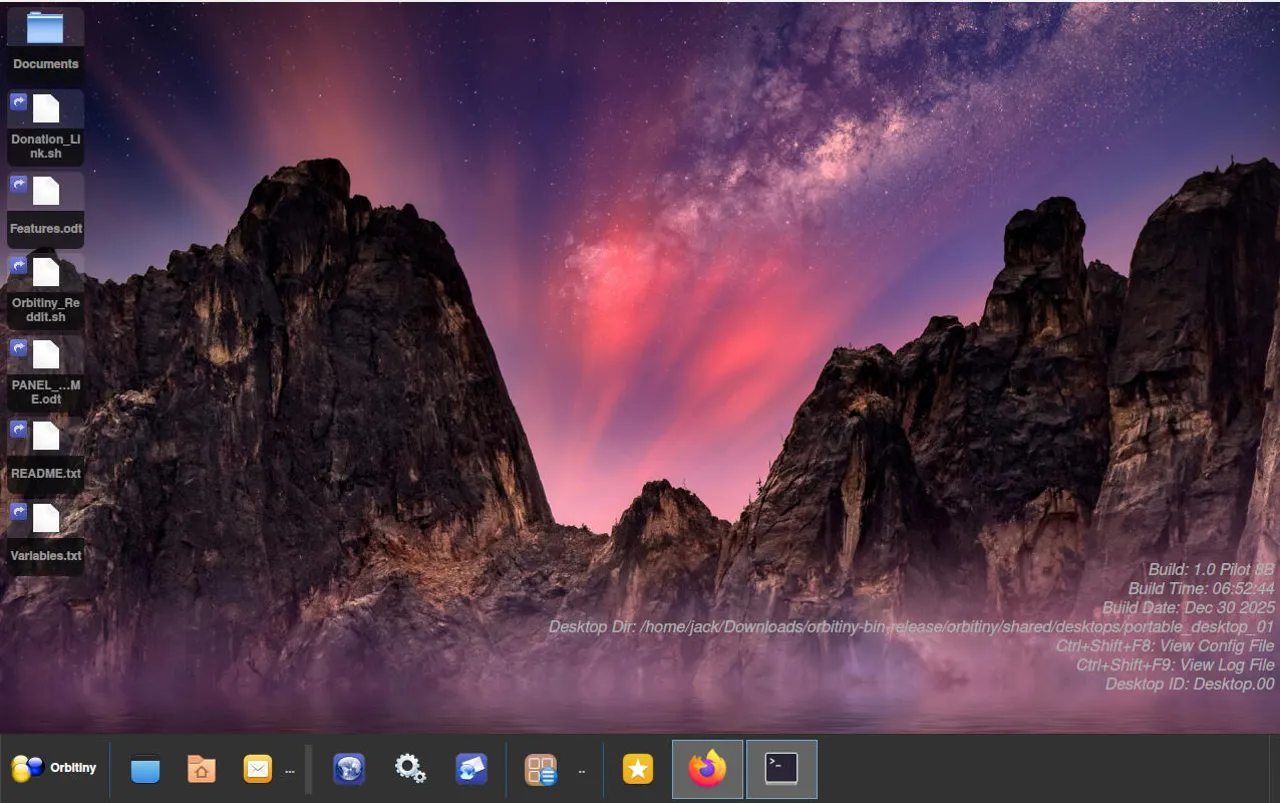

Leave it to the Linux community to push boundaries in ways other operating systems rarely do. The ingenuity of developers continually surprises, and one of the latest examples is a new desktop environment called Orbitiny. Built from scratch with Qt and C++, Orbitiny aims to blend familiarity with unique functionality, offering a fresh perspective on how desktops can operate.
Orbitiny is designed to be modular, meaning if one component fails, the rest of the desktop continues to function normally. Unlike conventional desktop environments, Orbitiny doesn’t include its own window manager. Instead, it runs on top of existing Linux window managers such as KDE Plasma or GNOME, functioning like any other application while adding its own layers of features.
The desktop offers a wide array of tools and conveniences. Users get a default file manager that can search both file names and contents, a customizable desktop panel with plugins, a built-in clipboard manager, a device manager, and a start menu with full drag-and-drop support. Additional features include a dashboard for running tasks and installed applications, desktop gestures to launch programs, and visual indicators for folder activities like copied or cut files. Orbitiny even allows combining text files or pasting text directly into a file for seamless productivity.
Another unique aspect of Orbitiny is its portability. Users can copy the necessary files to a USB drive, plug it into any Linux system, and launch the desktop without installation. While still in development and not recommended for heavy daily use, my hands-on experience showed that Orbitiny runs surprisingly smoothly, integrating well with the host environment and providing direct access to all existing files and folders. Once it reaches version 1.0, it could become a highly popular addition to the Linux desktop ecosystem.