

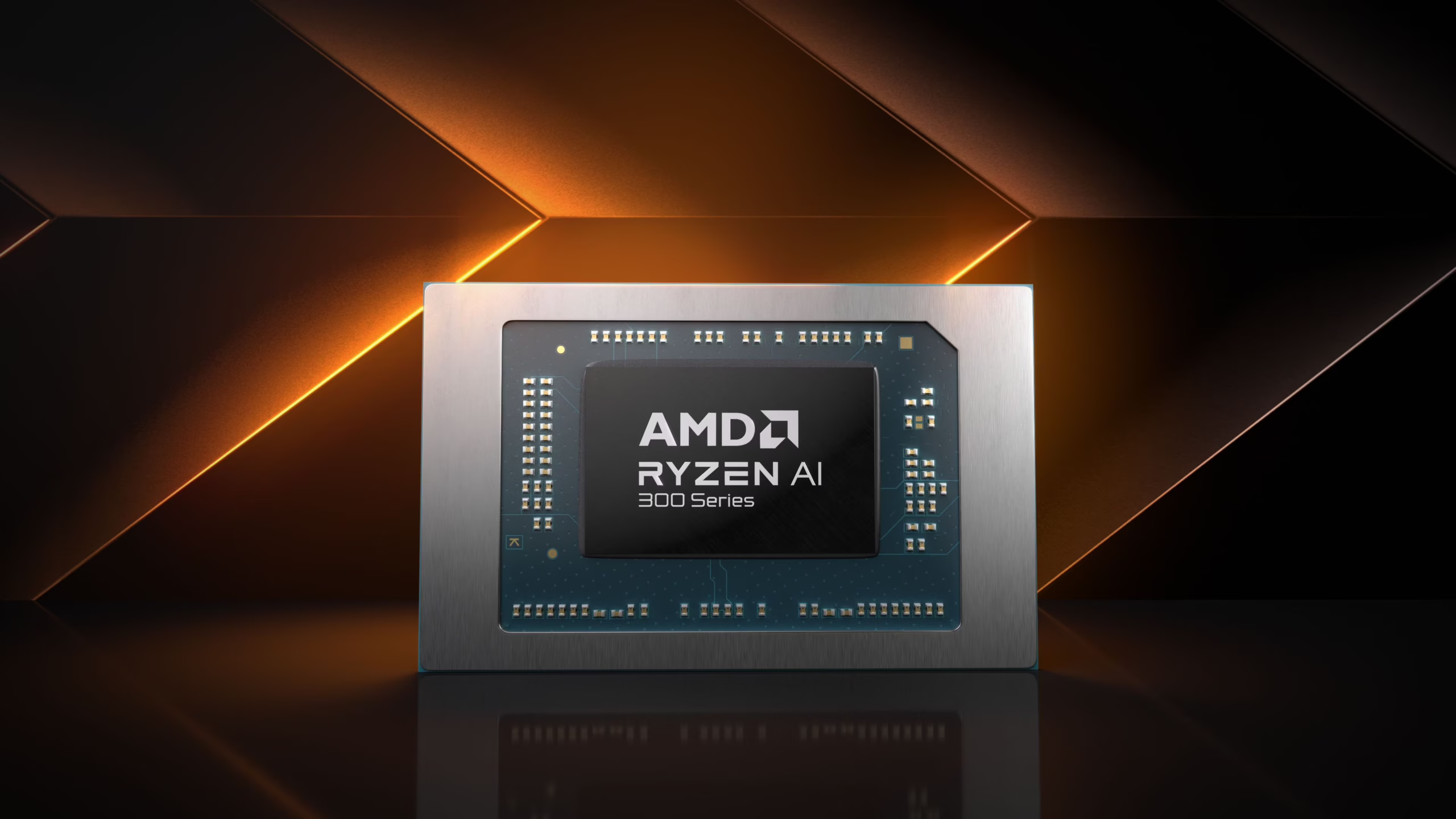
AMD’s decision to bring its Ryzen AI 400 “Gorgon Point” processors into socketed desktop PCs could unlock something the PC market has never really had before: the ability for consumers to purchase a mobile-class Ryzen processor and install it into a desktop system, potentially even upgrading it later like a traditional desktop CPU.
At CES 2026, AMD formally introduced Ryzen AI 400 as its next-generation laptop processor lineup. But buried within the announcement—and clarified further in interviews with AMD executives—was a notable shift in strategy: Ryzen AI 400 won’t be limited to soldered laptop designs. Instead, AMD confirmed that it will ship these processors in socketed desktop configurations using the AM5 platform.
For PC enthusiasts, that distinction matters. A socketed processor implies modularity—the same principle that allows desktop users to swap CPUs without replacing an entire system. Historically, mobile processors have been locked behind OEM supply chains, sold directly to laptop manufacturers like Lenovo or Acer, and never made available through retail channels such as Newegg or Amazon. Consumers simply couldn’t buy a laptop CPU on its own, even if they wanted to experiment.
Socketed Ryzen AI 400 desktop systems raise the possibility that this long-standing rule could finally change. If AMD—or its partners—allows these processors to be sold independently, it would blur the line between mobile and desktop CPUs in a way the PC industry hasn’t seen before. A mobile processor with a high-performance NPU, strong integrated graphics, and lower power requirements suddenly becomes a viable option for compact or efficient desktop builds.
AMD was given multiple chances to shut down this idea outright—and notably did not. In a CES 2026 roundtable interview, Jason Banta, AMD’s corporate vice president of client, stopped short of confirming DIY availability but left the door open.
“I think as we get closer to launch, we’ll have more information about DIY availability,” Banta said. He emphasized that AMD already has “active partnerships with OEMs on Ryzen AI 400 socketed designs,” while acknowledging that DIY discussions are still ongoing. “DIY is not something we are communicating information about at this time… more to come later.”
Officially, AMD says the socketed desktop version of Ryzen AI 400 will arrive in the second quarter of 2026 on the AM5 socket. Importantly, AMD isn’t restricting these chips to a single type of system. According to Banta, OEM interest spans everything from ultra-compact one-liter PCs to full-sized 30-liter desktop towers.
That flexibility is key. Socketed designs allow system builders, integrators, and potentially end users to reuse boards, avoid full redesigns, and experiment with form factors that were previously off-limits to mobile silicon. Whether AMD ultimately embraces full retail availability remains unknown—but for the first time, the concept of a consumer-upgradable mobile Ryzen CPU is no longer pure fantasy.