

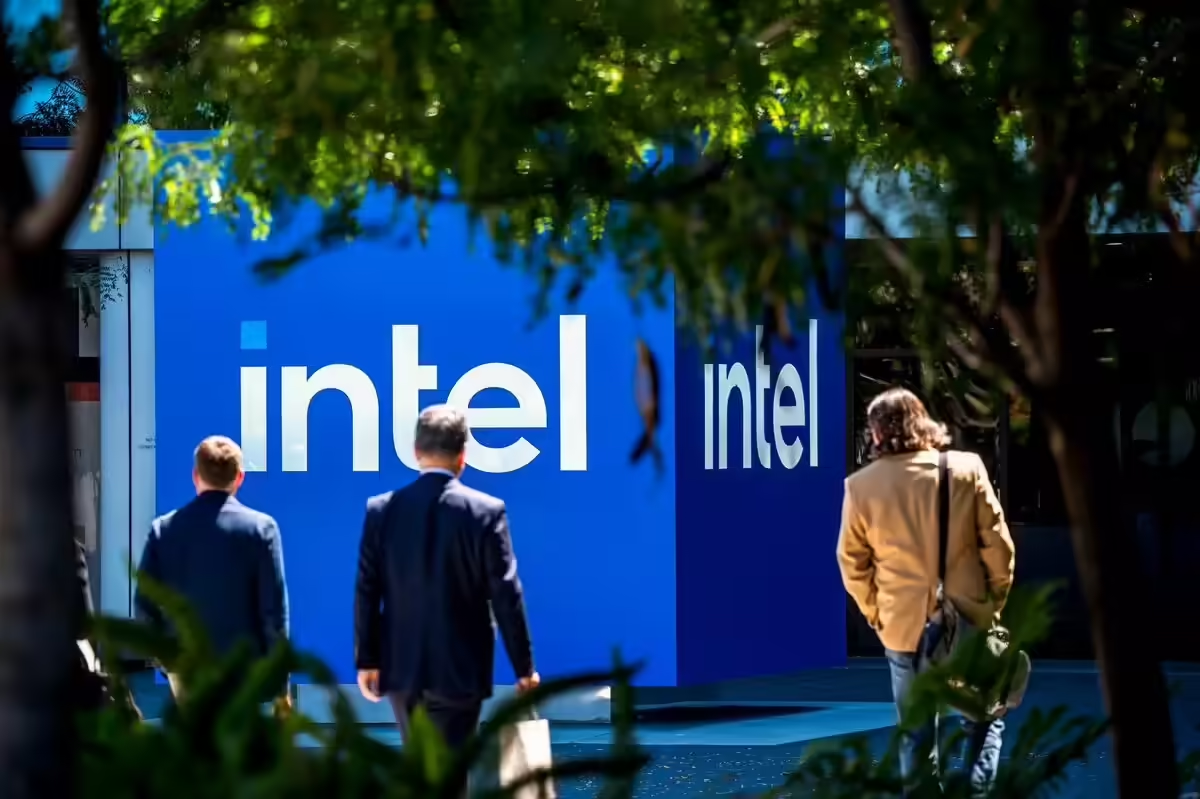

Intel’s role in revitalizing U.S. semiconductor manufacturing received a historic boost on Friday, as the company announced an $8.9 billion equity investment from the U.S. government. The deal, which had been in negotiation for weeks, was confirmed by President Trump at a White House press conference, signaling a major milestone for the CHIPS and Science Act’s industrial policy. The investment comprises funds from $5.7 billion in pending CHIPS Act grants and $3.2 billion from the Secure Enclave initiative, combined with $2.2 billion in grants already disbursed to Intel, bringing the total federal commitment to $11.1 billion. As part of the arrangement, the U.S. will acquire 9.9 percent of Intel’s outstanding common stock—equivalent to 433.3 million shares at $20.47 each—positioning the government as a significant but non-controlling shareholder.
While the government’s stake is pledged to be passive, with no board involvement or decision-making authority, the move underscores Washington’s determination to safeguard U.S. leadership in advanced chip manufacturing. The agreement also allows the government to expand its stake if Intel’s foundry ownership dips below 51 percent, a safeguard aimed at preserving domestic control of critical production capabilities. Intel CEO Lip-Bu Tan framed the deal as essential for national security and economic competitiveness, praising the administration’s commitment to supporting U.S.-based innovation. Industry leaders from Microsoft, Dell, HP, and AWS have also endorsed the investment, reflecting broad confidence in Intel’s ability to deliver on its ambitious foundry plans. Still, analysts remain cautious, pointing to Intel’s recent delays in planned factories and the ongoing challenge of securing major clients in a fiercely competitive global market.