

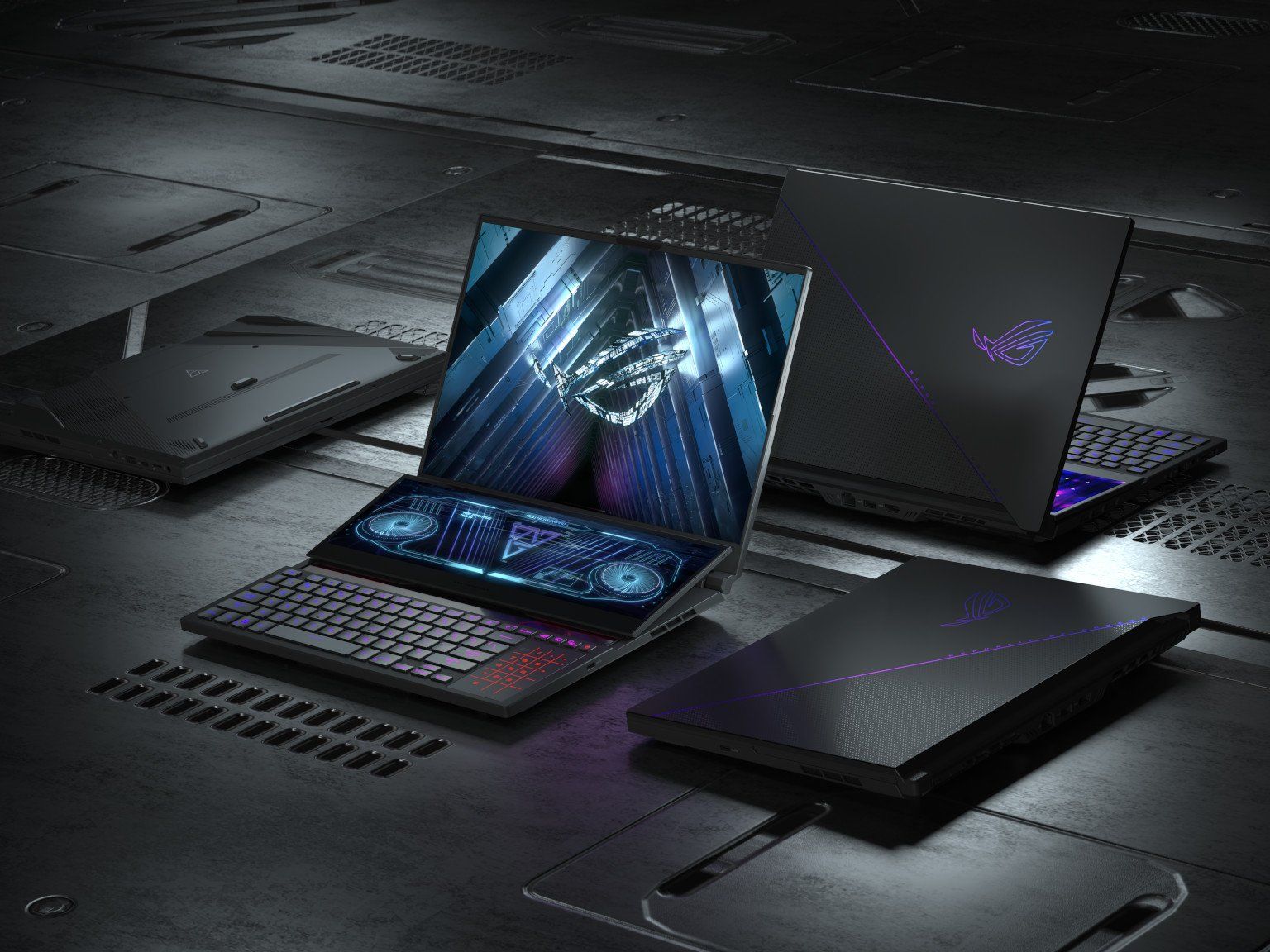

Asus has never been shy about experimental laptop designs, and the latest revision of the ROG Zephyrus Duo pushes that philosophy further than ever before. Earlier versions of the Duo stood out thanks to a wide secondary display stretching across the keyboard deck—a design memorable enough to even make a cameo in Spider-Man: No Way Home. This new iteration, however, abandons the traditional keyboard-first layout entirely, replacing it with a second full-sized display. The result is a striking dual-screen setup featuring two 16-inch OLED touch panels, effectively turning the Zephyrus Duo into a portable, foldable workstation.
Underneath those screens sits hardware that firmly places the Duo in flagship territory. Asus is pairing the design with Intel’s upcoming “next-generation” Core Ultra processors, widely expected to be part of the Panther Lake family, alongside options for an Nvidia GeForce RTX 5090 discrete GPU. Configuration options reportedly go as high as 64GB of RAM and 2TB of PCIe Gen5 SSD storage, complete with easy-access swap support. Combined, these specifications position the Zephyrus Duo as one of the most powerful laptops Asus has ever built, blurring the line between high-end gaming systems and professional mobile workstations.
Despite the ROG branding, Asus appears to be targeting more than just gamers. Dual screens offer limited advantages during gameplay, beyond secondary uses such as chat windows, streaming controls, or reference material. Instead, Asus is clearly pitching the Duo as a productivity and creative machine. Thanks to a built-in kickstand, a detachable wireless keyboard and touchpad, and multiple orientation modes, the laptop can be used in traditional laptop form, as a dual-display workstation with both screens visible, laid flat for stylus input, or arranged side by side for multitasking-heavy workflows like video editing, design, or software development.
Some of the more experimental usage modes, such as folding the device into a Yoga-style configuration with one screen facing another user, feel more theoretical than practical. Windows 11’s limitation of focusing input on a single active window makes true dual-user interaction difficult, especially for gaming scenarios. While mirrored displays and controller-based co-op setups may work in niche cases, this configuration is unlikely to be a major draw for most players.
What may surprise many is that the Zephyrus Duo isn’t as bulky as its dual-screen design suggests. Asus claims the laptop measures just 0.77 inches (19.6mm) thick and weighs 6.28 pounds (2.8kg). While far from ultraportable, those dimensions are comparable to many mid-range gaming laptops. This footprint also accommodates a 90Wh fast-charging battery, which Asus rates for up to 12 hours of video playback—though real-world endurance under heavy, dual-screen workloads is expected to be far more modest.