

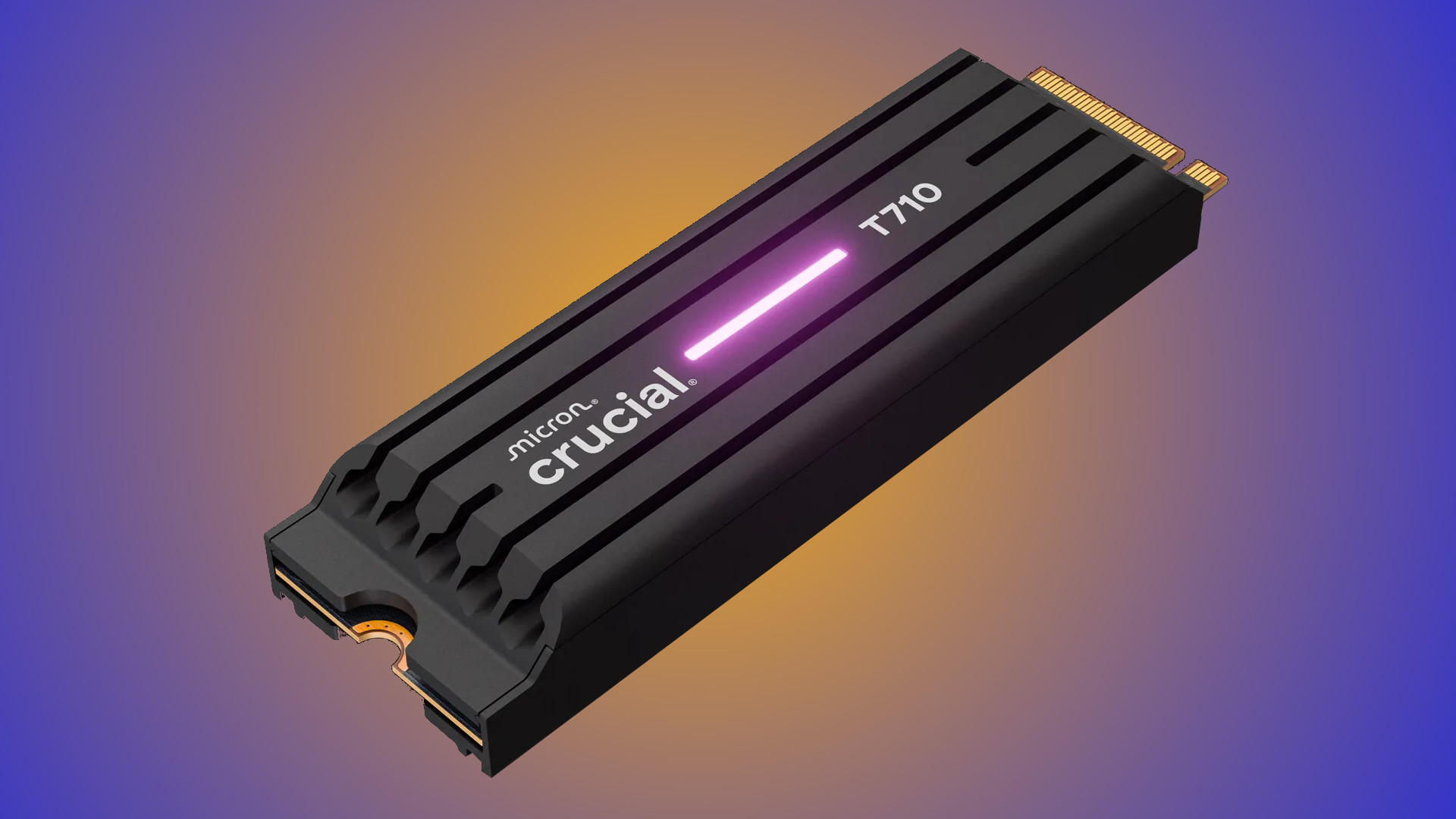
Cutting-edge SSD tech is tempting, especially when it drops in price — and today, the Crucial T710 2TB PCIe Gen 5 M.2 SSD is available for just $229.99 on Amazon. That’s $130 off its original price, putting this next-gen storage drive closer than ever to Gen 4 SSDs in terms of cost. But before you jump on this deal, it’s worth asking: do you actually need PCIe 5.0 speeds?
For most users, the answer is a qualified no. Even for gamers with high-end builds, PCIe 5.0 SSDs provide minimal practical benefit. Load times for games, system boot speeds, and everyday applications don’t improve drastically over what PCIe 4.0 SSDs already offer. So unless you’re working with enormous files — think uncompressed 8K footage, scientific simulations, machine learning datasets, or large media archive handling — the jump in speed won’t translate into real-world performance gains.
Still, if you’re building a top-tier desktop with one of the latest motherboards and CPUs that support Gen 5 storage, the Crucial T710 offers a high-performance solution that won’t throttle under pressure. It can deliver sequential write speeds north of 14,000MB/s, and Crucial has designed it to manage thermals effectively without requiring a giant heatsink, which makes it a better fit for many system builds than bulkier alternatives. Just be aware this is a full-size 2280 drive — not suitable for most laptops, handhelds, or systems with M.2 size constraints.
The current $230 pricing makes the T710 an intriguing option. Top-end Gen 4 drives with similar capacity — like the Samsung 990 Pro or WD Black SN850X — still hover around the $180–$200 range. So if you want to invest in next-gen performance for a small premium, this might be the sweet spot. Just don’t expect your games to load twice as fast, because they won’t.
Ultimately, the Crucial T710 is an excellent SSD at a very reasonable price for what it offers — if your use case demands those lightning-fast speeds. For everyone else, you’re likely better served by investing in a faster GPU, a new CPU, or just sticking with the still-speedy Gen 4 drives for now.