


Close Menu
Şevket Ayaksız

    Subscribe to Updates

    Get the latest creative news from FooBar about art, design and business.

    What's Hot

    Google Maps vs Waze: I Put the Two Best Navigation Apps Head-to-Head — and One Clearly Came Out on Top

    Mayıs 1, 2026

    Samsung Electronics Offers Free 32-Inch Odyssey gaming monitor: Eligibility and How to Claim Deal

    Mayıs 1, 2026

    T-Mobile Bundles Free Hulu and Netflix for 5G Users: Eligibility Explained

    Mayıs 1, 2026
    Facebook X (Twitter) Instagram
    • software
    • Gadgets
    Facebook X (Twitter) Instagram
    Şevket AyaksızŞevket Ayaksız
    Subscribe
    • Home
    • Technology

      Google Maps vs Waze: I Put the Two Best Navigation Apps Head-to-Head — and One Clearly Came Out on Top

      Mayıs 1, 2026

      T-Mobile Bundles Free Hulu and Netflix for 5G Users: Eligibility Explained

      Mayıs 1, 2026

      This Portable Mini PC Is the Unexpected Raspberry Pi Alternative You Might Actually Want

      Mayıs 1, 2026

      Samsung warns RAM shortages could worsen beyond 2027

      Mayıs 1, 2026

      Oxford study finds friendly AI chatbots are less accurate

      Mayıs 1, 2026
    • Adobe
    • Microsoft
    • java
    • Oracle
    Şevket Ayaksız
    Anasayfa » Gartner Analysis: Oracle’s New Java Subscription Model Expected to Increase Costs
    java

    Gartner Analysis: Oracle’s New Java Subscription Model Expected to Increase Costs

    By mustafa efeTemmuz 14, 2024Yorum yapılmamış2 Mins Read
    Facebook Twitter Pinterest LinkedIn Tumblr Email
    Share
    Facebook Twitter LinkedIn Pinterest Email

    Oracle Shifts Subscription Model: Java SE Universal Subscription’s Per-Employee Pricing

    Oracle’s recent shift in its Java subscription licensing model has raised concerns about potential cost increases for both existing and new customers, according to a recent analysis by Gartner. Effective January 23, Oracle replaced its previous Java SE and Java SE Desktop subscriptions with the Java SE Universal subscription. This new model introduces a significant change by shifting from a licensing structure based on named user plus and processor counts to a per-employee metric.

    Under the previous licensing model, Oracle defined named user plus as individuals authorized by an enterprise to use the programs, whether actively or not, installed on one or multiple servers. This count also includes non-human users. Processors running Oracle programs were counted as such and accessible by internal enterprise users.

    The transition to per-employee pricing in the Java SE Universal Subscription has prompted concerns among enterprises about potential cost implications. According to the Gartner report, this change is likely to result in increased subscription costs compared to the legacy Java SE Subscription and Java SE Desktop Subscription models.

    Gartner’s analysis suggests that the adoption of an employee-based metric could lead to higher costs due to the way enterprises will need to account for every employee potentially accessing Java. This shift could particularly impact large enterprises with extensive employee bases, potentially increasing their software expenditure.
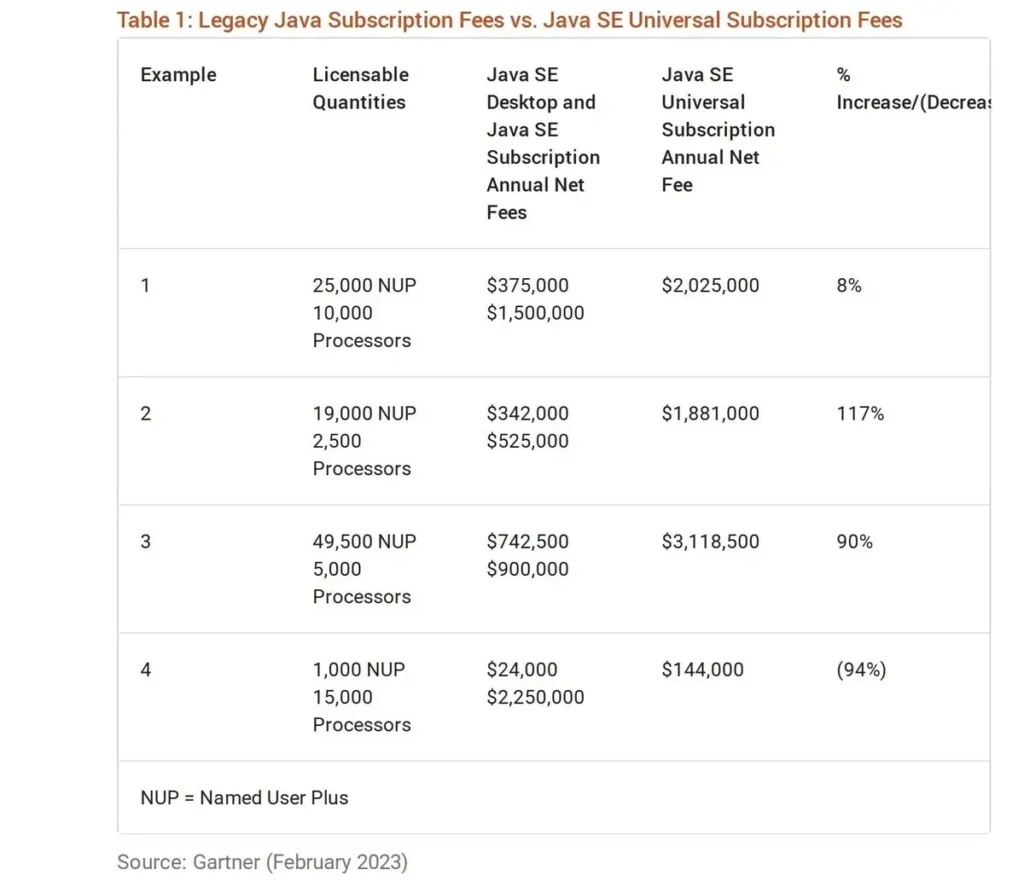


    The report highlights that while Oracle’s intent may have been to simplify licensing by moving to a per-employee metric, the financial impact on customers could be substantial. Enterprises are advised to carefully assess their current and future Java usage needs to understand how this change might affect their budgeting and operational plans.

    As organizations evaluate the implications of Oracle’s new subscription model, they are urged to consider negotiating contracts based on actual usage patterns to mitigate potential cost hikes. This approach could involve optimizing license agreements to align more closely with operational requirements and anticipated growth.

    In conclusion, Oracle’s decision to introduce the Java SE Universal Subscription with a per-employee pricing model represents a significant shift in how enterprises will license and pay for Java usage. The move has triggered concerns within the industry about increased costs and underscores the importance for organizations to strategize their software procurement and licensing strategies effectively amidst evolving subscription models.

    Post Views: 294
    java Programming Languages Software Development
    Share. Facebook Twitter Pinterest LinkedIn Tumblr Email
    mustafa efe
    • Website

    Related Posts

    Optimizing Java Streams for High-Performance Applications

    Aralık 20, 2025

    AI Brings a New Spark to JavaScript Programming

    Kasım 9, 2025

    Revisiting the Spring Framework: What’s New and Why It Still Matters

    Kasım 9, 2025
    Add A Comment

    Comments are closed.

    Editors Picks
    8.5

    Apple Planning Big Mac Redesign and Half-Sized Old Mac

    Ocak 5, 2021

    Autonomous Driving Startup Attracts Chinese Investor

    Ocak 5, 2021

    Onboard Cameras Allow Disabled Quadcopters to Fly

    Ocak 5, 2021
    Top Reviews
    9.1

    Review: T-Mobile Winning 5G Race Around the World

    By sevketayaksiz
    8.9

    Samsung Galaxy S21 Ultra Review: the New King of Android Phones

    By sevketayaksiz
    8.9

    Xiaomi Mi 10: New Variant with Snapdragon 870 Review

    By sevketayaksiz
    Advertisement
    Demo
    Şevket Ayaksız
    Facebook X (Twitter) Instagram YouTube
    • Home
    • Adobe
    • microsoft
    • java
    • Oracle
    • Contact
    © 2026 Theme Designed by Şevket Ayaksız.

    Type above and press Enter to search. Press Esc to cancel.