

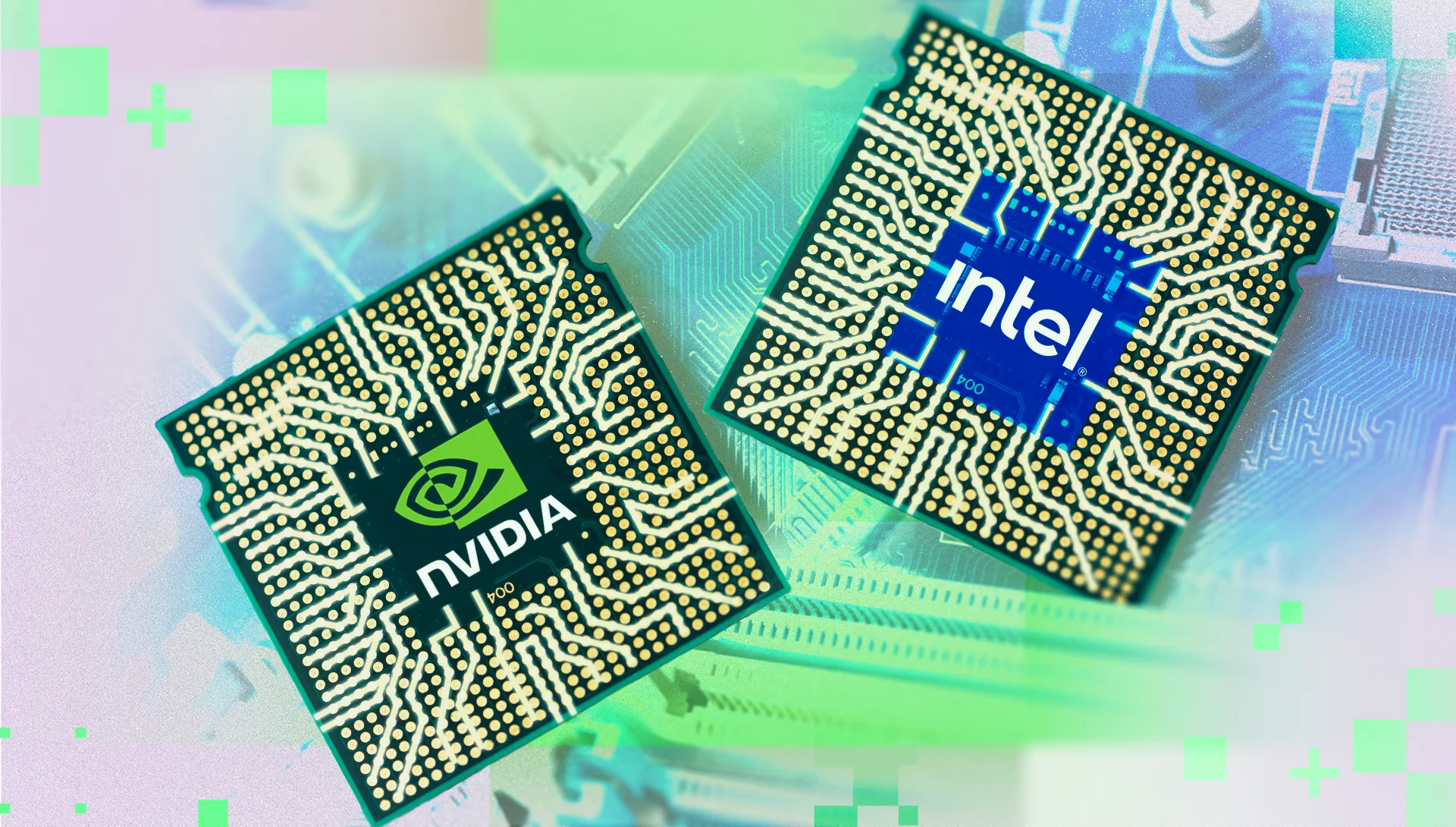
Intel and Nvidia’s ambitious collaboration on integrated CPUs and GPUs promises to redefine laptop graphics—but the timeline remains unclear, with industry insiders predicting the first products may not arrive for several years. Nvidia’s $5 billion investment into Intel last week formalized the partnership, which will see Intel providing CPU cores for Nvidia’s data center ambitions, while in PCs the companies aim to combine Intel processors with Nvidia RTX chiplets, potentially creating a new class of high-performance mobile SoCs.
On a recent conference call, Nvidia CEO Jensen Huang described the effort as a fusion of CPU and GPU dies through NVLink, Nvidia’s high-speed interface, into a single, “virtual giant SoC.” The resulting system could deliver unprecedented performance in integrated graphics laptops. Intel, meanwhile, emphasized that the partnership will augment, not disrupt, its roadmap, adding premium GPU-enhanced options for its mobile and desktop offerings.
Despite the promise, competitors and analysts are cautious. Concerns revolve around Intel’s ability to engineer a complex NVLink-based SoC, given past performance and reliability issues. Questions also linger about Nvidia’s strategic intent, as its discrete GPU business already dominates high-end graphics markets. Historical precedent adds to the uncertainty: Intel’s prior collaboration with AMD on the Kaby Lake G and 8th-gen Core with Vega M graphics chips in 2018 demonstrated technical potential, but market adoption was limited and future iterations never materialized.
The collaboration also comes at a sensitive time in the PC market. AMD has been steadily gaining market share in desktops, and Qualcomm is pushing Snapdragon mobile processors for laptops, though adoption remains low. Mercury Research reported that ARM-powered Copilot+ PCs accounted for only 2.3 percent of Windows PC sales in early 2025, with growth showing signs of stagnation. As a result, Intel’s dominance—especially in laptops, where it commands roughly 80 percent market share—remains largely unchallenged, but the Nvidia partnership could become a critical tool to defend that position in the years ahead.