

The handheld PC gaming market is heating up once again, and Lenovo is stepping back into the fight with its Legion Go 2, scheduled for release in October with an entry price of $1,049. While the company is also preparing the smaller and more affordable Legion Go S to go toe-to-toe with the Steam Deck, the Legion Go 2 doubles down on high-end hardware, chasing players who want uncompromising power in a portable Windows machine. Central to that approach is AMD’s new Ryzen Z2 Extreme APU, featuring 8 Zen 5 CPU cores alongside a 16-core integrated GPU based on RDNA 3.5 — one of the most advanced designs seen in handhelds so far.
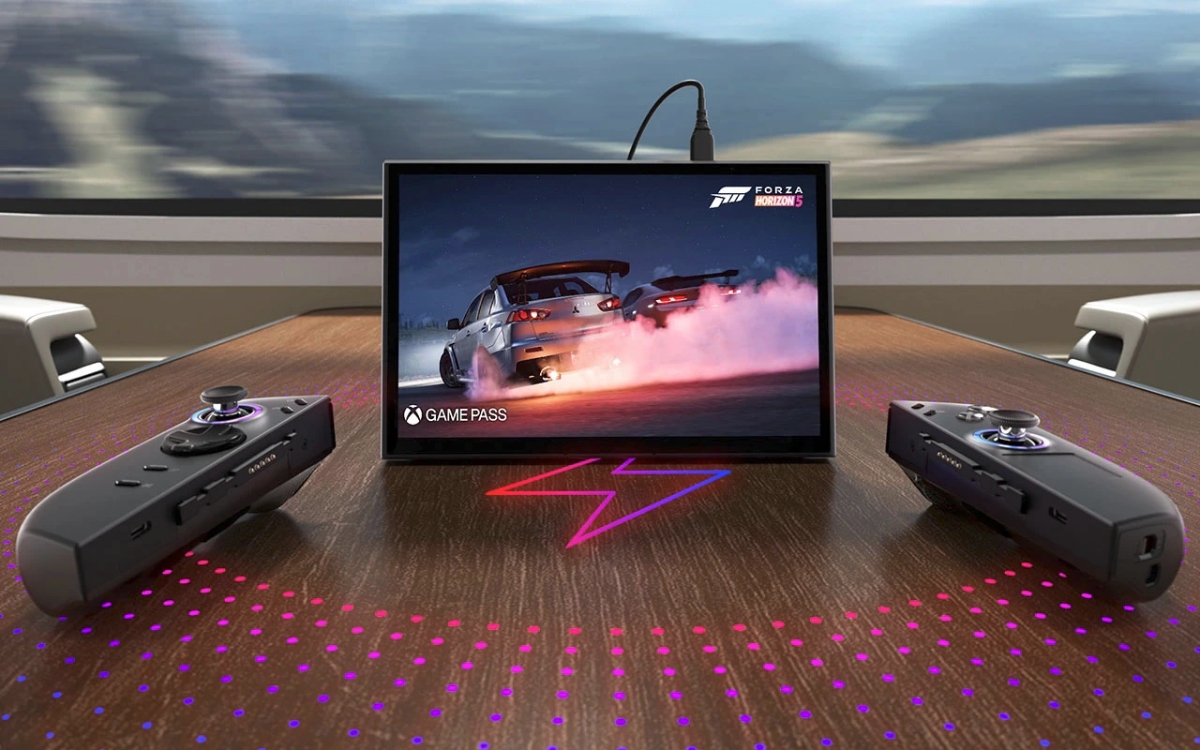
Visually and functionally, the Legion Go 2 refines rather than reinvents. The 8.8-inch panel has been upgraded to OLED, keeping the same 1920×1200 resolution but with deeper contrast, a 144Hz refresh rate, and VRR support for smoother gameplay across demanding scenarios. The detachable “TrueStrike” controllers are back, including the innovative right-hand module that can double as a motion-enabled gaming mouse for shooters. Lenovo has reworked the ergonomics slightly, while retaining features like dual USB-C ports, a sturdy kickstand, an oversized touchpad, and additional mouse buttons. Importantly, these new controllers are backward-compatible with the first Legion Go, giving existing users a potential upgrade path.
The hardware list is equally ambitious: up to 32GB of DDR5 8000MHz RAM, up to 2TB of Gen4 SSD storage, and a 74Wh battery that’s more than 50% bigger than its predecessor. Expansion via MicroSD up to 2TB and hall-effect joysticks round out a design meant to combine durability with raw horsepower. As with most “up to” spec sheets, the $1,049 entry model won’t ship with the maximum configuration, but all buyers can expect the expanded battery and controller improvements as standard.
Lenovo is officially marketing the device under the awkward name “Legion Go (8.8”, 2),” but most will recognize it simply as the Legion Go 2. Its primary competition will be Asus’ ROG Ally X, also expected in October, which has the advantage of Microsoft’s early handheld-focused Windows 11 interface. That exclusive edge could evaporate in 2026, potentially leveling the field. Meanwhile, ongoing tariff disputes mean U.S. pricing could still fluctuate before launch, while international pricing remains an open question. Even so, the Legion Go 2 represents Lenovo’s most confident step yet into handheld PC gaming, emphasizing premium build quality and maximum performance for players who want their portable device to deliver a full desktop-class experience.