


Spring WebFlux: Hands-On with Reactor
Reactive programming represents a significant paradigm shift in software development, leveraging an event-driven model that originated from functional programming concepts. It emphasizes the use of streams, producers, and subscribers to handle asynchronous and nonblocking IO operations effectively. In Java, reactive programming is facilitated by frameworks like Spring WebFlux, which provides robust support for building reactive applications. This article serves as a practical guide to exploring reactive Java programming with Spring WebFlux.
Spring WebFlux is a key player in the realm of reactive programming in Java. It offers an abstraction layer that enables developers to create reactive web components using various underlying reactive implementations. The default implementation used by Spring WebFlux is Reactor, which we will focus on in this demonstration. Reactor provides powerful tools for working with reactive streams, making it well-suited for building scalable and efficient applications that can handle a high volume of concurrent requests.
To get started with Spring WebFlux, you can initialize a new application using the Spring command-line tool. Installing the Spring CLI is straightforward, especially if you use tools like SDKMan. After installing SDKMan and ensuring you have Java 17 or later installed, you can easily add the Spring CLI using the command $ sdk i springboot. Once installed, you can verify the installation with $ spring --version, which should confirm that the CLI is ready for use.
Once your development environment is set up, creating a new Spring WebFlux application involves defining reactive endpoints and handling asynchronous data processing. Spring WebFlux simplifies this process by providing annotations and utilities that streamline the development of reactive components. For instance, you can define a reactive controller using @RestController and handle asynchronous requests using Mono and Flux from Reactor. These classes represent asynchronous results and streams of data, respectively, enabling you to write concise and efficient code for handling reactive workflows.
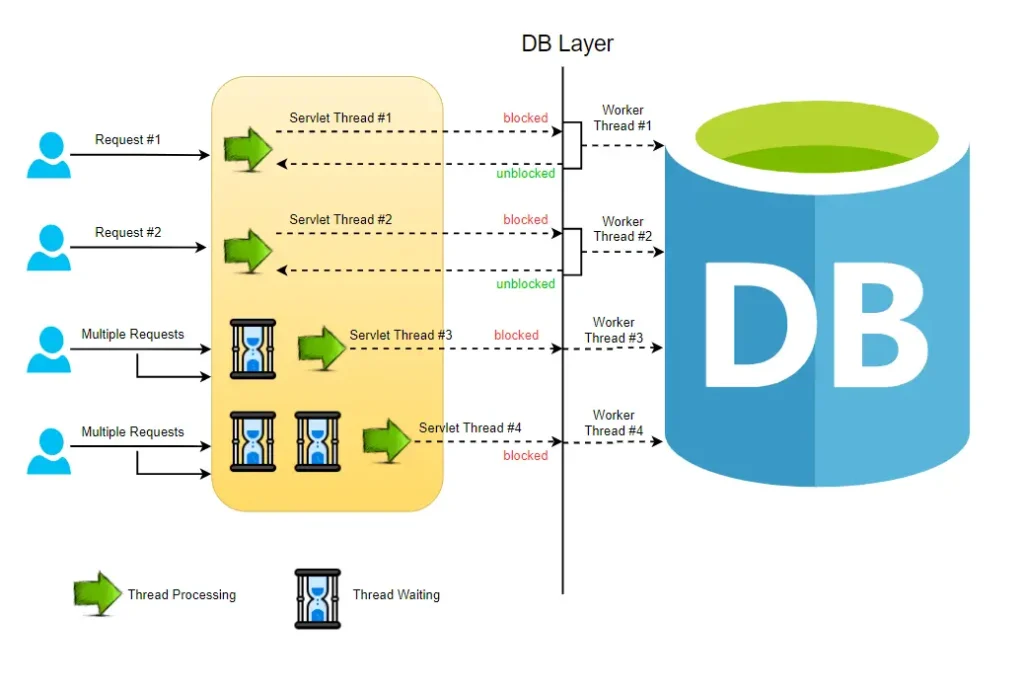
Beyond handling web requests, Spring WebFlux integrates seamlessly with reactive data access frameworks like Spring Data R2DBC and MongoDB Reactive Repositories. This integration allows you to build end-to-end reactive applications where data persistence operations are also performed asynchronously. By leveraging reactive repositories and reactive streams, developers can achieve better performance and scalability compared to traditional blocking IO approaches.
Moreover, Spring WebFlux supports reactive testing capabilities through tools like WebTestClient, which allows for writing integration tests that validate reactive endpoints and behaviors. This ensures that reactive components behave as expected under various scenarios, including concurrent requests and data streams.
In conclusion, Spring WebFlux with Reactor provides a robust foundation for building reactive Java applications. It empowers developers to harness the power of reactive programming to handle IO-intensive tasks efficiently and scale applications seamlessly. By embracing reactive principles and leveraging the capabilities of Spring WebFlux, developers can create responsive, resilient, and high-performance applications that meet the demands of modern software development.