


Copying Objects Is A Common Java Programming Operation That Has One Serious Trap Here’s How To Avoid Copying From An Object Reference And Only Copy The Instance And Values You Want
Copying Objects Is A Common Operation In Enterprise Projects When Copying An Object We Must Ensure That We End Up With A New Instance That Holds The Values We Want
Copying objects is a common operation in enterprise projects. When copying an object, we must ensure that we end up with a new instance that holds the values we want. Domain objects are usually complex. Making a copy with the root object and composed objects is also not trivial.Let’s explore the most effective ways to copy an object using shallow and deep copy techniques.
Object References To correctly perform a shallow or deep object copy, we must first know what not to do. Understanding object references is essential for using shallow and deep copy techniques.
When making a copy of an object, it is important to avoid using the same object reference. It’s an easy mistake, as this example shows. To start, here’s the Product object we’ll use in our examples:
Understanding object references is crucial because copying an object reference instead of creating a new instance can lead to unintended consequences. When two objects share the same reference, changes to one object will affect the other, leading to potential bugs and data inconsistencies. By mastering shallow and deep copy techniques, you can ensure that your copied objects are truly independent of the originals.
Shallow Copy A shallow copy creates a new instance of the object but does not create new instances of the objects that the original object references. This means that the copied object will share references to the same instances of the sub-objects as the original object. Shallow copying is often sufficient for simpler objects but can be problematic for more complex objects that contain nested objects or mutable data structures.
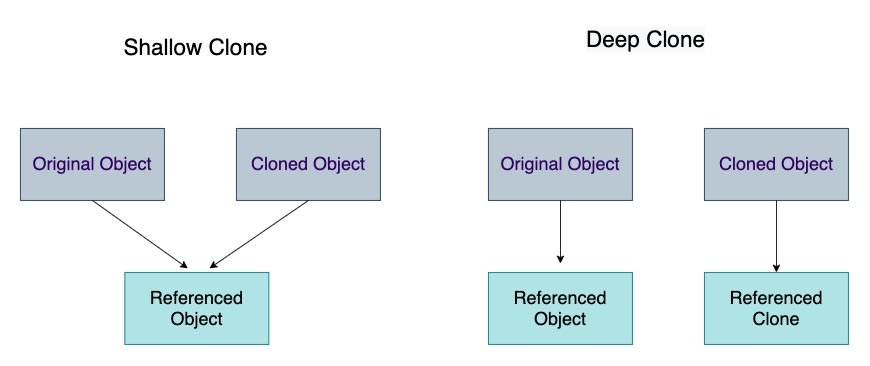
Deep Copy A deep copy, on the other hand, creates a new instance of the object and also creates new instances of all the objects referenced by the original object. This ensures that the copied object is entirely independent of the original object, with no shared references. Deep copying is more complex and computationally expensive than shallow copying, but it is necessary for copying complex objects with nested structures or mutable state.
Shallow Copy with Serialization Serialization provides a convenient way to perform a shallow copy by serializing and deserializing the object. This method involves converting the object to a byte stream and then reconstructing it from the byte stream. While this approach ensures that a new instance is created, it does not handle nested objects or references within the object itself. However, it is useful for simple objects or when you only need a shallow copy.
Deep Copy with Serialization For deep copying with serialization, you need to serialize the entire object graph, including all nested objects and references. This approach ensures that all referenced objects are also copied, resulting in a completely independent copy of the original object. Although this method is more complex and resource-intensive, it is the most reliable way to achieve a true deep copy of complex objects in Java.
By understanding and applying these shallow and deep copy techniques, you can avoid common pitfalls associated with object copying in Java and ensure that your applications handle object references correctly.