


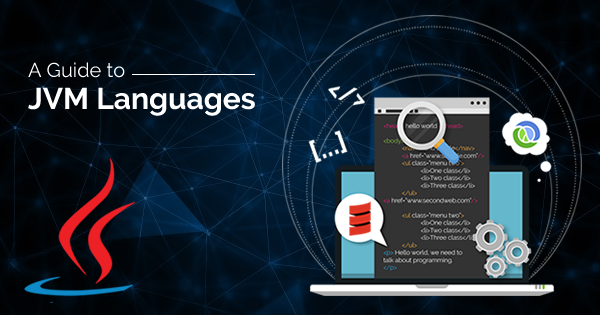
The Java Virtual Machine (JVM) powers a rich ecosystem of languages beyond Java itself, offering developers versatility, performance, and interoperability. Among the most prominent JVM languages are Kotlin, Scala, Groovy, and Clojure, each bringing unique strengths and catering to different use cases, from Android apps to server-side and functional programming.
Kotlin has gained significant traction in recent years, largely due to its concise, expressive syntax and full interoperability with Java. It supports both object-oriented and functional programming paradigms, making it flexible for a variety of projects. Google’s endorsement of Kotlin as the preferred language for Android development in 2019 accelerated its adoption, while ongoing support from JetBrains ensures stability, tooling integration, and continuous innovation. Features like null safety, multiplatform support, and compatibility with GraalVM for native compilation make Kotlin an attractive choice for modern development.
Scala, another JVM favorite, emphasizes functional programming while maintaining strong object-oriented capabilities. It excels in building scalable applications, particularly for big data and distributed systems, with seamless integration with Apache Spark. Scala’s concise syntax reduces boilerplate code, and its powerful type system helps catch errors at compile time. This makes it ideal for developers seeking expressive, high-performance solutions while leveraging JVM’s ecosystem and libraries.
Groovy and Clojure each offer distinct advantages. Groovy, with its dynamic typing and scripting capabilities, is widely used for rapid prototyping, automation, and Jenkins pipelines. Clojure, a functional Lisp dialect, focuses on immutability and concurrency, making it ideal for highly parallel, reactive, or data-intensive applications. Together, these JVM languages demonstrate the flexibility of the JVM ecosystem, allowing developers to choose the right tool for their specific needs while benefiting from shared libraries, interoperability, and robust runtime performance.