

Deep Unveils Vanguard, an Underwater Habitat Designed for Week-Long Human Missions
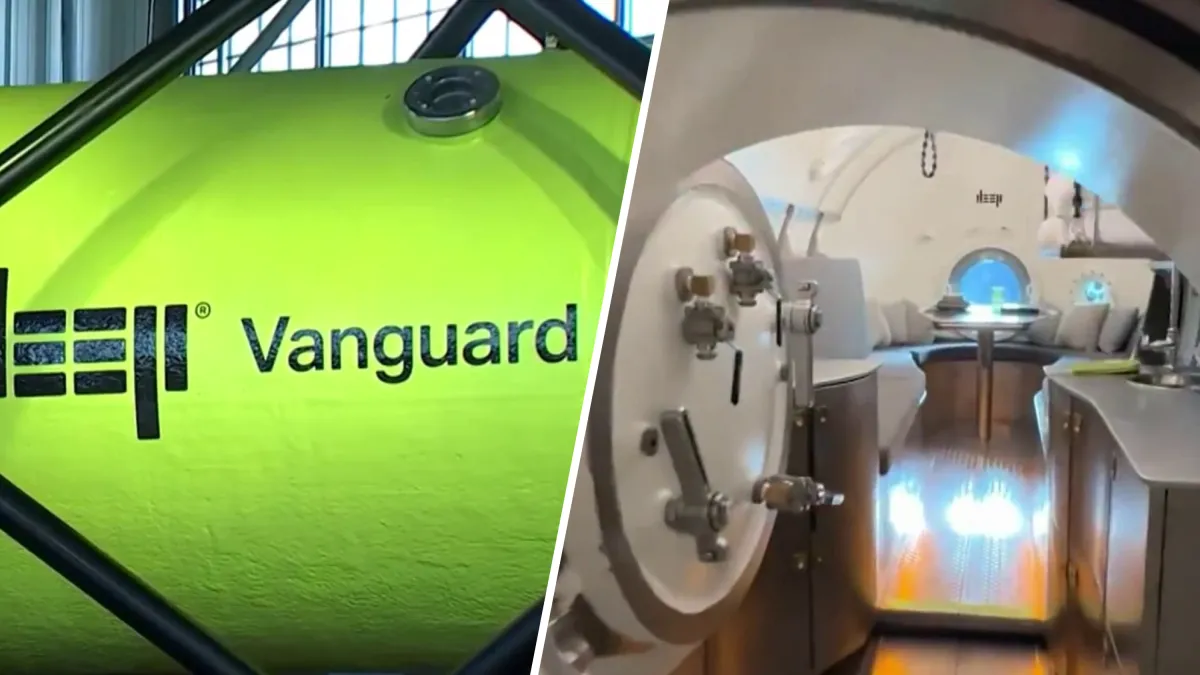
A company called Deep has launched Vanguard, a new underwater habitat designed to keep humans living and working on the ocean floor for extended periods. The subsea habitat can accommodate up to four people for missions lasting a week or longer without requiring them to return to the surface.
The project serves as a stepping stone toward Deep’s long-term goal of creating a permanent underwater research station comparable to the International Space Station.
Built Around Saturation Diving
Vanguard is designed to support saturation diving, a technique already used in commercial and scientific deep-sea operations.
Instead of repeatedly ascending after each dive, occupants remain under pressure inside the habitat. Once their bodies become fully saturated with the breathing gas mixture, they can perform multiple dives without lengthy decompression after every excursion.
This significantly increases the amount of time available for underwater work while reducing repeated decompression procedures, which can often take longer than the dives themselves.
Designed for Living and Working Underwater
Despite its compact size, Vanguard includes the essential facilities needed for extended stays beneath the sea:
- Sleeping quarters with four beds
- Food preparation area
- Dining table overlooking the ocean
- Combined bathroom and workstation
- Dive center featuring a moon pool, allowing divers to enter and exit the water without surfacing
The habitat is intended to function as both a living space and a scientific workspace for subsea missions.
A Testbed for Larger Ocean Habitats
Deep describes Vanguard as a proof of concept for a much larger project known as Sentinel.
Sentinel is envisioned as a modular underwater habitat where researchers could live and work for much longer periods. Unlike Vanguard, it would include private sleeping cabins and additional modules designed to support long-term scientific operations beneath the ocean.
The concept has been compared to building an International Space Station for the sea.
Supporting Science and Space Exploration
The first missions aboard Vanguard are expected to focus on a variety of research areas, including:
- Marine biology
- Coral reef restoration
- Long-duration underwater habitation
- Human performance in extreme environments
Deep also believes the habitat could play a role in preparing astronauts for future space missions. Living underwater shares many operational challenges with spaceflight, including isolation, confined living conditions, and reliance on life-support systems, making underwater habitats valuable training environments.
While Sentinel remains in development, Vanguard marks an important milestone toward establishing a long-term human presence beneath the ocean’s surface for scientific exploration and research.