

Close Menu
Şevket Ayaksız

    Subscribe to Updates

    Get the latest creative news from FooBar about art, design and business.

    What's Hot

    Windows 11 bug has blocked updates for some PCs since February

    Mayıs 24, 2026

    Anker’s 25,000mAh laptop power bank drops $39 to $96

    Mayıs 24, 2026

    Ring Indoor Cam Plus drops to a record-low $35 on Amazon

    Mayıs 24, 2026
    Facebook X (Twitter) Instagram
    • software
    • Gadgets
    Facebook X (Twitter) Instagram
    Şevket AyaksızŞevket Ayaksız
    Subscribe
    • Home
    • Technology

      HP OmniBook 5 drops to $699 with 16GB RAM and long battery life

      Mayıs 11, 2026

      Anker’s 9-port charging station drops to $34 on Amazon

      Mayıs 11, 2026

      DDR5 counterfeits surge as the RAM shortage worsens

      Mayıs 11, 2026

      Google Maps vs Waze: I Put the Two Best Navigation Apps Head-to-Head — and One Clearly Came Out on Top

      Mayıs 1, 2026

      T-Mobile Bundles Free Hulu and Netflix for 5G Users: Eligibility Explained

      Mayıs 1, 2026
    • Adobe
    • Microsoft
    • java
    • Oracle
    Şevket Ayaksız
    Anasayfa » Boost Python Function Performance Using Memoization and lru_cache
    software

    Boost Python Function Performance Using Memoization and lru_cache

    By mustafa efeAralık 31, 2024Yorum yapılmamış2 Mins Read
    Facebook Twitter Pinterest LinkedIn Tumblr Email
    Share
    Facebook Twitter LinkedIn Pinterest Email

    Enhance Python Performance with Memoization and lru_cache

    Python, known for its ease of use and readability, often sacrifices raw performance for programmer convenience. While this tradeoff works well for most applications, there are times when you may need to optimize your code for speed. Luckily, Python offers several built-in tools to help with performance enhancement, and one of the most effective is memoization.

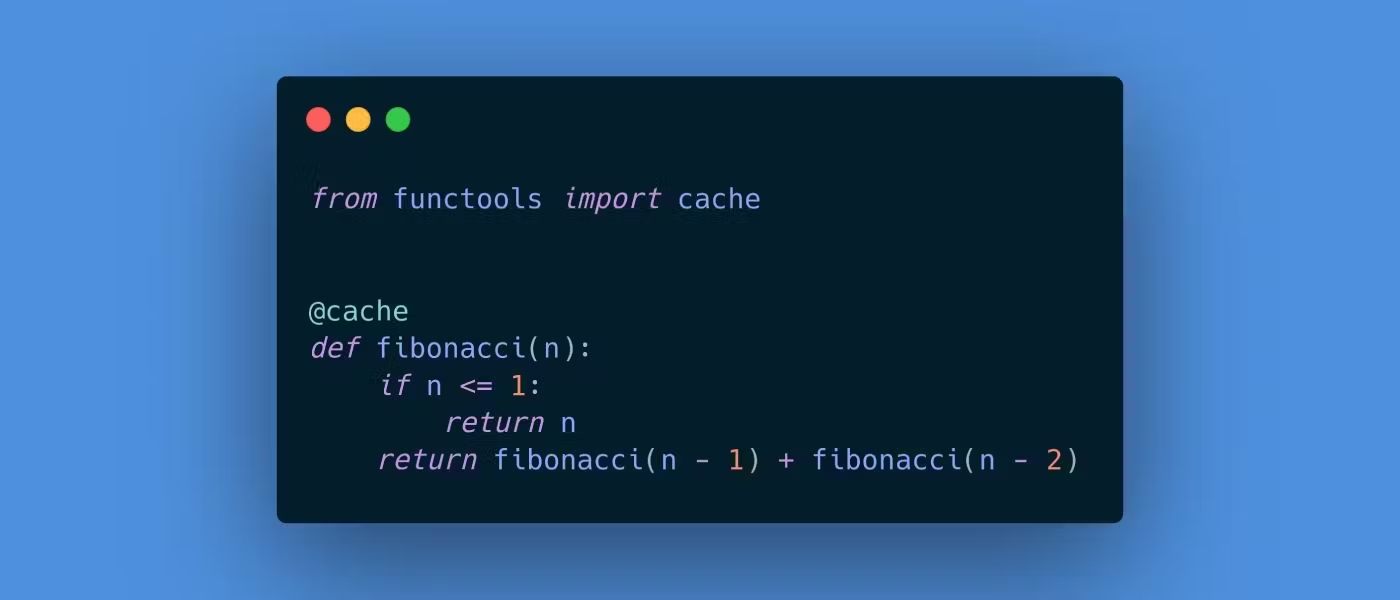
    Memoization is a technique that stores the results of expensive function calls so that when the same inputs are encountered again, the results can be retrieved directly from cache, eliminating the need for redundant computations. In Python, the lru_cache decorator from the functools module provides a straightforward way to implement memoization. This built-in utility is highly efficient and works well for functions that are called frequently with the same parameters.

    The power of lru_cache goes beyond simply caching function results. It also allows for more advanced behavior management at runtime. For example, you can track cache performance with the .cache_info() method, which provides statistics on the total number of cache hits, misses, the maximum cache size, and the current cache size. These insights can help you monitor and fine-tune your caching strategy.

    In some cases, you may want to invalidate the cache manually. The .cache_clear() method allows you to reset the cache when specific conditions change. This can be especially useful in scenarios like rendering a user-specific webpage, where data needs to be re-fetched if the user’s information has been updated. By using lru_cache with manual cache clearing, you can improve performance without sacrificing accuracy or freshness of the data, ensuring a faster and more responsive application.

    Post Views: 238
    java Programming Languages Software Development
    Share. Facebook Twitter Pinterest LinkedIn Tumblr Email
    mustafa efe
    • Website

    Related Posts

    Microsoft faces fresh security chaos after May Patch Tuesday

    Mayıs 24, 2026

    Microsoft is phasing out SMS verification for personal accounts

    Mayıs 19, 2026

    Microsoft patches 120 security flaws in May Windows updates

    Mayıs 14, 2026
    Add A Comment

    Comments are closed.

    Editors Picks
    8.5

    Apple Planning Big Mac Redesign and Half-Sized Old Mac

    Ocak 5, 2021

    Autonomous Driving Startup Attracts Chinese Investor

    Ocak 5, 2021

    Onboard Cameras Allow Disabled Quadcopters to Fly

    Ocak 5, 2021
    Top Reviews
    9.1

    Review: T-Mobile Winning 5G Race Around the World

    By sevketayaksiz
    8.9

    Samsung Galaxy S21 Ultra Review: the New King of Android Phones

    By sevketayaksiz
    8.9

    Xiaomi Mi 10: New Variant with Snapdragon 870 Review

    By sevketayaksiz
    Advertisement
    Demo
    Şevket Ayaksız
    Facebook X (Twitter) Instagram YouTube
    • Home
    • Adobe
    • microsoft
    • java
    • Oracle
    • Contact
    © 2026 Theme Designed by Şevket Ayaksız.

    Type above and press Enter to search. Press Esc to cancel.