


Close Menu
Şevket Ayaksız

    Subscribe to Updates

    Get the latest creative news from FooBar about art, design and business.

    What's Hot

    Chainguard launches Athena, an AI-powered initiative designed

    Haziran 16, 2026

    Sony WH-1000XM6 vs. Sennheiser Momentum 5: The headphones

    Haziran 16, 2026

    Fast chargers with flagship iPhone, Samsung, and OnePlus phones

    Haziran 16, 2026
    Facebook X (Twitter) Instagram
    • software
    • Gadgets
    Facebook X (Twitter) Instagram
    Şevket AyaksızŞevket Ayaksız
    Subscribe
    • Home
    • Technology

      Fast chargers with flagship iPhone, Samsung, and OnePlus phones

      Haziran 16, 2026

      7 budget-friendly upgrades that made my TV sound dramatically better

      Haziran 16, 2026

      Valve targets a summer launch for Steam Machine but keeps pricing secret

      Haziran 7, 2026

      Intel and Phison aim to overcome local AI’s memory bottleneck

      Haziran 2, 2026

      Nvidia RTX Spark could transform the next generation of gaming handhelds

      Haziran 2, 2026
    • Adobe
    • Microsoft
    • java
    • Oracle
    Şevket Ayaksız
    Anasayfa » Exploring Reactive Programming with Spring WebFlux and Reactor in Java
    software

    Exploring Reactive Programming with Spring WebFlux and Reactor in Java

    By mustafa efeTemmuz 1, 2024Yorum yapılmamış2 Mins Read
    Facebook Twitter Pinterest LinkedIn Tumblr Email
    Share
    Facebook Twitter LinkedIn Pinterest Email

    Deep Dive into Reactive Programming: Harnessing Spring WebFlux with Reactor in Java

    Reactive programming represents a paradigm shift rooted in functional programming principles, emphasizing an event-driven approach using streams, producers, and subscribers. This methodology simplifies complex logic by enabling asynchronous, non-blocking handling of IO operations within applications. In Java, reactive programming leverages the java.nio package’s expressive APIs to achieve these capabilities. Numerous frameworks and tools support reactive programming in Java, with Spring WebFlux standing out as a prominent choice. This article serves as a practical introduction to reactive Java programming using Spring WebFlux.

    TABLE OF CONTENTS

    1. Reactivity with Spring
    2. Reactive Programming by Example
    3. Using the Reactive HTTP Client
    4. Conclusion

    Reactivity with Spring

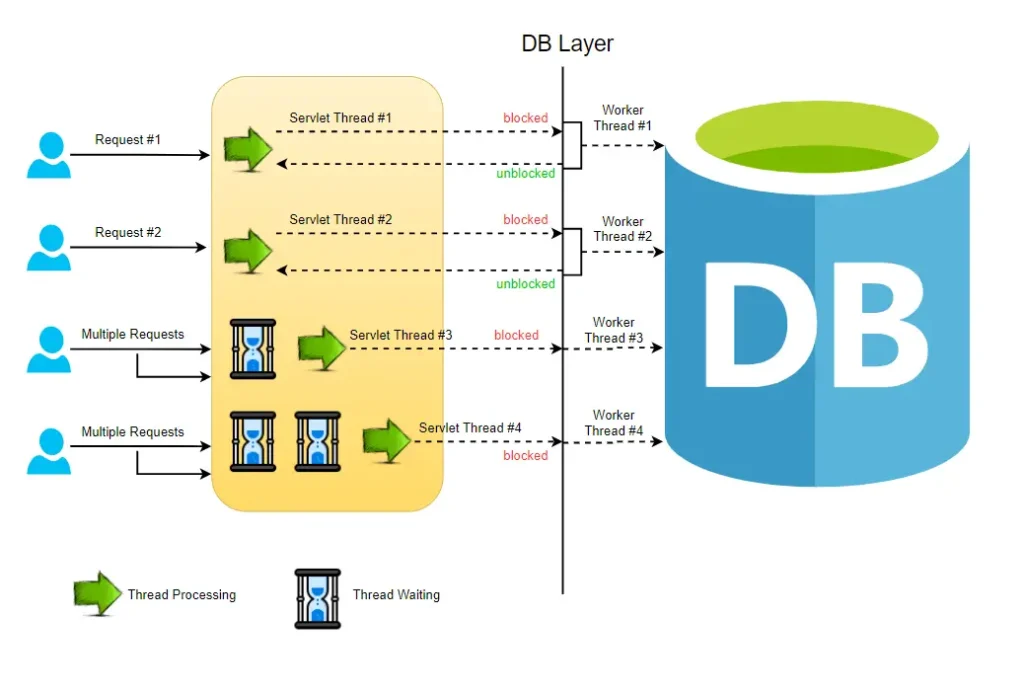
    Reactive programming offers a unified approach to handling asynchronous operations, such as web requests and data access, through event producers and subscribers. In Spring’s ecosystem, WebFlux provides an abstraction layer for building reactive web components. This abstraction supports various reactive implementations, with Reactor being the default choice for our demonstration.

    Reactive Programming by Example

    To illustrate reactive programming with Spring WebFlux, we’ll begin by setting up a new application using the Spring command-line tool. Installing the tool can be easily accomplished using SDKMan, a popular tool for managing Java-related dependencies. Once SDKMan is installed and configured with Java 17 or higher, you can add the Spring CLI by executing:
    Reactivity with Spring

    Reactivity gives us a powerful single idiom for describing and combining functionality like web requests and data access. In general, we use event producers and subscribers to describe asynchronous event sources and what should happen when an event is activated.

    In the typical Spring framework style, WebFlux provides an abstraction layer for building reactive web components. That means you can use a couple of different underlying reactive implementations. The default is Reactor, which we’ll use for the demonstration.

    To begin, we’ll initialize a new application with the Spring command-line tool. There are a few ways to install this tool, but I like using SDKMan. You’ll need to have Java 17+ installed. You can find the instructions for installing SDKMan for your operating system here. Once installed you can add the Spring CLI with: $ sdk i springboot. Now the command $ spring --version should work.

    Post Views: 393
    Development Libraries and Frameworks java Software Development
    Share. Facebook Twitter Pinterest LinkedIn Tumblr Email
    mustafa efe
    • Website

    Related Posts

    Chainguard launches Athena, an AI-powered initiative designed

    Haziran 16, 2026

    3 unofficial Android Auto apps that transformed my car’s infotainment screen

    Haziran 16, 2026

    ChatGPT’s new “Dreaming” feature boosts memory and personalization

    Haziran 7, 2026
    Add A Comment

    Comments are closed.

    Editors Picks
    8.5

    Apple Planning Big Mac Redesign and Half-Sized Old Mac

    Ocak 5, 2021

    Autonomous Driving Startup Attracts Chinese Investor

    Ocak 5, 2021

    Onboard Cameras Allow Disabled Quadcopters to Fly

    Ocak 5, 2021
    Top Reviews
    9.1

    Review: T-Mobile Winning 5G Race Around the World

    By sevketayaksiz
    8.9

    Samsung Galaxy S21 Ultra Review: the New King of Android Phones

    By sevketayaksiz
    8.9

    Xiaomi Mi 10: New Variant with Snapdragon 870 Review

    By sevketayaksiz
    Advertisement
    Demo
    Şevket Ayaksız
    Facebook X (Twitter) Instagram YouTube
    • Home
    • Adobe
    • microsoft
    • java
    • Oracle
    • Contact
    © 2026 Theme Designed by Şevket Ayaksız.

    Type above and press Enter to search. Press Esc to cancel.