

Close Menu
Şevket Ayaksız

    Subscribe to Updates

    Get the latest creative news from FooBar about art, design and business.

    What's Hot

    Google Maps vs Waze: I Put the Two Best Navigation Apps Head-to-Head — and One Clearly Came Out on Top

    Mayıs 1, 2026

    Samsung Electronics Offers Free 32-Inch Odyssey gaming monitor: Eligibility and How to Claim Deal

    Mayıs 1, 2026

    T-Mobile Bundles Free Hulu and Netflix for 5G Users: Eligibility Explained

    Mayıs 1, 2026
    Facebook X (Twitter) Instagram
    • software
    • Gadgets
    Facebook X (Twitter) Instagram
    Şevket AyaksızŞevket Ayaksız
    Subscribe
    • Home
    • Technology

      Google Maps vs Waze: I Put the Two Best Navigation Apps Head-to-Head — and One Clearly Came Out on Top

      Mayıs 1, 2026

      T-Mobile Bundles Free Hulu and Netflix for 5G Users: Eligibility Explained

      Mayıs 1, 2026

      This Portable Mini PC Is the Unexpected Raspberry Pi Alternative You Might Actually Want

      Mayıs 1, 2026

      Samsung warns RAM shortages could worsen beyond 2027

      Mayıs 1, 2026

      Oxford study finds friendly AI chatbots are less accurate

      Mayıs 1, 2026
    • Adobe
    • Microsoft
    • java
    • Oracle
    Şevket Ayaksız
    Anasayfa » Exploring the Java Virtual Machine (JVM)
    java

    Exploring the Java Virtual Machine (JVM)

    By mustafa efeTemmuz 16, 2024Yorum yapılmamış2 Mins Read
    Facebook Twitter Pinterest LinkedIn Tumblr Email
    Share
    Facebook Twitter LinkedIn Pinterest Email

    Understanding the Java Virtual Machine (JVM)

    The Java Virtual Machine (JVM) is a pivotal component in the Java ecosystem, designed with dual roles that have revolutionized software development since its inception. Fundamentally, the JVM acts as an intermediary between Java programs and the underlying hardware and operating system. Its primary objectives are twofold: to facilitate the portability of Java applications across different platforms through the “write once, run anywhere” principle, and to efficiently manage and optimize program memory during execution.

    Historically, the JVM emerged at a time when software development was tightly coupled to specific operating systems, requiring developers to tailor applications for each platform. Java’s introduction of the JVM changed this paradigm by providing a unified runtime environment. This allowed developers to write Java code once and deploy it on any device or operating system that supports Java, a concept foundational to Java’s widespread adoption and longevity.

    At its core, the JVM operates as a software implementation of a computer’s abstract architecture. It interprets compiled Java bytecode, which is platform-independent and generated from Java source code, into machine-specific instructions. This bytecode execution model ensures that Java applications maintain their functionality and performance characteristics across diverse computing environments without requiring recompilation.
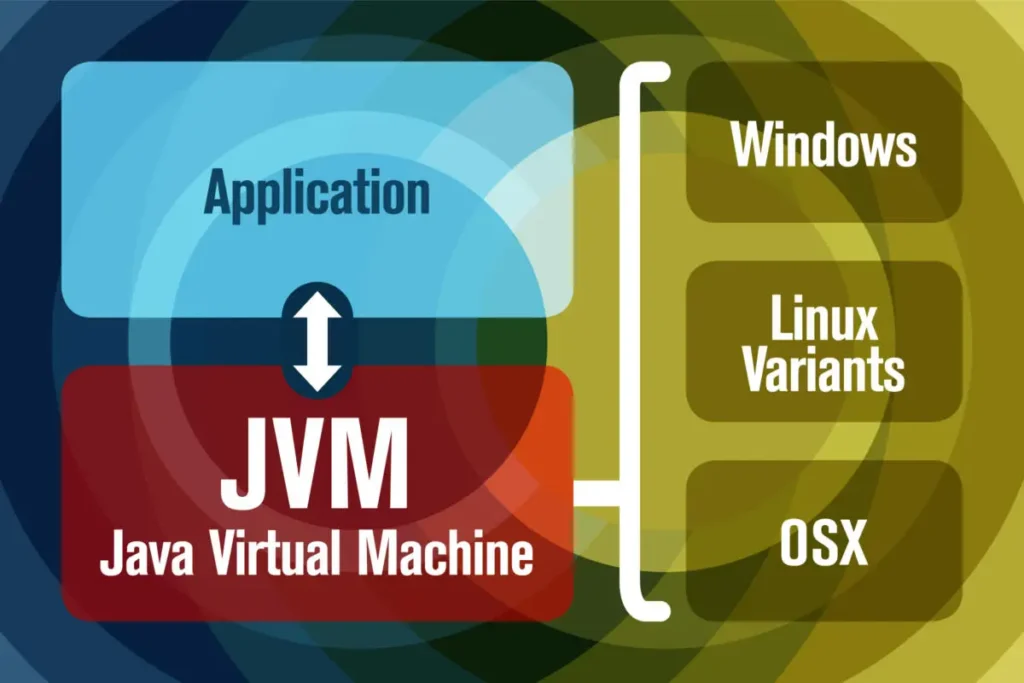


    In practical terms, when developers refer to the JVM, they typically mean the actual instance of the JVM process running on a server or device, managing the execution of a Java application. This instance handles crucial tasks such as memory allocation, garbage collection, thread management, and runtime environment configuration. Developers configure JVM settings to optimize performance and resource utilization, ensuring efficient operation of Java applications in production environments.

    Furthermore, the JVM specification delineates the requirements and behaviors that JVM implementations must adhere to. This specification ensures consistency in how Java programs are executed across different JVM implementations, whether from Oracle, OpenJDK, or other vendors. It standardizes the runtime environment, fostering compatibility and interoperability among Java applications developed by different teams and deployed on various platforms.

    In summary, the JVM stands as a cornerstone of Java’s success by enabling cross-platform compatibility, memory management efficiency, and consistent runtime behavior for Java applications. Its role in abstracting hardware differences and providing a stable execution environment has cemented Java’s reputation as a robust and versatile programming language, supporting a wide range of applications from enterprise systems to mobile apps and embedded devices.

    Post Views: 334
    java Programming Languages Software Development
    Share. Facebook Twitter Pinterest LinkedIn Tumblr Email
    mustafa efe
    • Website

    Related Posts

    Optimizing Java Streams for High-Performance Applications

    Aralık 20, 2025

    AI Brings a New Spark to JavaScript Programming

    Kasım 9, 2025

    Revisiting the Spring Framework: What’s New and Why It Still Matters

    Kasım 9, 2025
    Add A Comment

    Comments are closed.

    Editors Picks
    8.5

    Apple Planning Big Mac Redesign and Half-Sized Old Mac

    Ocak 5, 2021

    Autonomous Driving Startup Attracts Chinese Investor

    Ocak 5, 2021

    Onboard Cameras Allow Disabled Quadcopters to Fly

    Ocak 5, 2021
    Top Reviews
    9.1

    Review: T-Mobile Winning 5G Race Around the World

    By sevketayaksiz
    8.9

    Samsung Galaxy S21 Ultra Review: the New King of Android Phones

    By sevketayaksiz
    8.9

    Xiaomi Mi 10: New Variant with Snapdragon 870 Review

    By sevketayaksiz
    Advertisement
    Demo
    Şevket Ayaksız
    Facebook X (Twitter) Instagram YouTube
    • Home
    • Adobe
    • microsoft
    • java
    • Oracle
    • Contact
    © 2026 Theme Designed by Şevket Ayaksız.

    Type above and press Enter to search. Press Esc to cancel.