

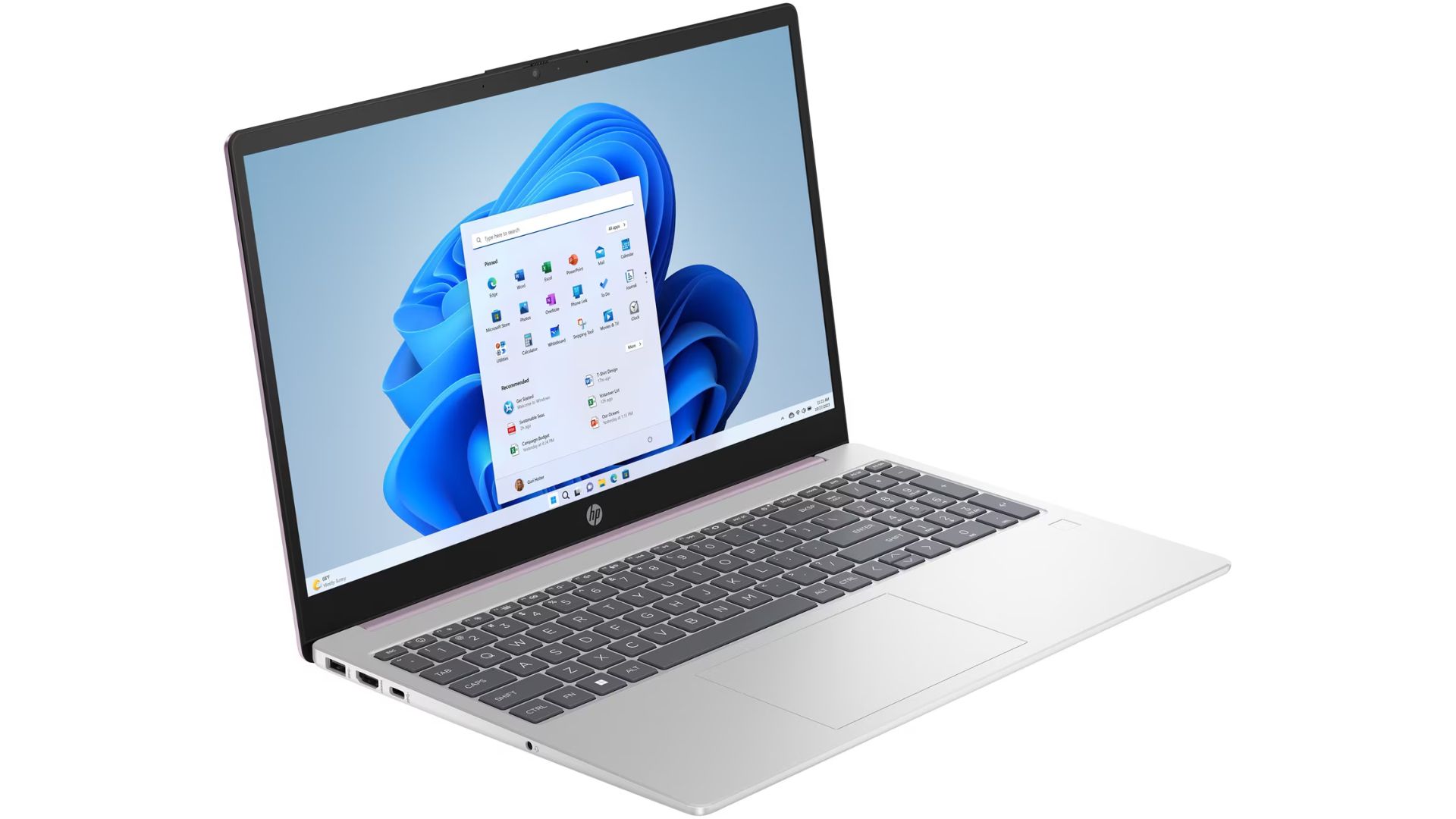
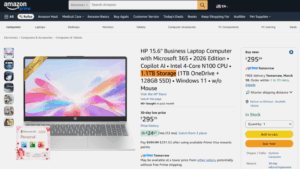
Misleading laptop listings are raising concerns among buyers, with some sellers advertising budget HP laptops as having “1.1TB of storage”—when in reality, most of that capacity isn’t physical.
The listings typically include 128GB of internal storage combined with a 1TB cloud storage trial via OneDrive, bundled through a one-year subscription to Microsoft 365. Once the trial expires, users must pay an annual fee to retain access to that cloud storage.
Not what it seems
While technically accurate in total capacity, presenting this combination as “1.1TB storage” can be misleading, as the majority of it depends on an active subscription and internet access.
The issue was highlighted in online discussions and later reported by VideoCardz, noting that many such listings come from third-party sellers on platforms like Amazon and Newegg—not directly from HP.
In some cases, listings also exaggerated other specs, such as claiming “up to 32GB RAM” while the actual configuration included only 4GB.
Platforms respond cautiously
Amazon stated that third-party sellers must follow platform policies and that violating listings can be removed, though it did not confirm whether this specific practice breaches its rules.
Some flagged listings have already been taken down, but similar ones remain active, suggesting inconsistent enforcement.
Buyer beware
As hardware prices rise and budget devices become harder to find, such marketing tactics may become more common. Experts advise checking:
- Actual internal storage (SSD size)
- RAM configuration (installed vs. “up to”)
- Subscription-based add-ons
For most users, 128GB of storage and 4GB RAM is considered insufficient for modern Windows 11 systems, especially over time.
The situation highlights the importance of carefully reviewing specifications before purchasing, particularly when deals appear unusually generous.