


Close Menu
Şevket Ayaksız

    Subscribe to Updates

    Get the latest creative news from FooBar about art, design and business.

    What's Hot

    Samsung warns RAM shortages will deepen beyond 2027

    Mayıs 3, 2026

    Windows 11 April update breaks third-party backup software

    Mayıs 3, 2026

    Oxford study finds friendly AI chatbots make more mistakes

    Mayıs 3, 2026
    Facebook X (Twitter) Instagram
    • software
    • Gadgets
    Facebook X (Twitter) Instagram
    Şevket AyaksızŞevket Ayaksız
    Subscribe
    • Home
    • Technology

      Google Maps vs Waze: I Put the Two Best Navigation Apps Head-to-Head — and One Clearly Came Out on Top

      Mayıs 1, 2026

      T-Mobile Bundles Free Hulu and Netflix for 5G Users: Eligibility Explained

      Mayıs 1, 2026

      This Portable Mini PC Is the Unexpected Raspberry Pi Alternative You Might Actually Want

      Mayıs 1, 2026

      Samsung warns RAM shortages could worsen beyond 2027

      Mayıs 1, 2026

      Oxford study finds friendly AI chatbots are less accurate

      Mayıs 1, 2026
    • Adobe
    • Microsoft
    • java
    • Oracle
    Şevket Ayaksız
    Anasayfa » Implementing Custom Exception Handling in ASP.NET Core 8
    software

    Implementing Custom Exception Handling in ASP.NET Core 8

    By mustafa efeEylül 3, 2024Yorum yapılmamış2 Mins Read
    Facebook Twitter Pinterest LinkedIn Tumblr Email
    Share
    Facebook Twitter LinkedIn Pinterest Email

    Implementing Custom Exception Handling in ASP.NET Core 8

    The release of .NET 8 in November has introduced a range of exciting new features, particularly in ASP.NET Core 8. One of the standout improvements is the new IExceptionHandler interface, which simplifies how developers manage exceptions in their ASP.NET Core web applications. With IExceptionHandler, handling exceptions becomes more streamlined, allowing for better organization and more readable code.

    Traditionally, error handling in web applications can be cumbersome, involving numerous try-catch blocks and middleware configurations to handle different types of exceptions. The IExceptionHandler interface addresses these challenges by providing a unified way to manage exceptions, offering a central location to handle known errors. This makes it easier to present meaningful error messages to users, improving the overall user experience and robustness of the application.

    To get started with IExceptionHandler in ASP.NET Core 8, you need to set up your environment. Make sure you have Visual Studio 2022 installed. If you haven’t done so, you can download it from the official Microsoft website. Once your environment is set up, you can create a new ASP.NET Core 8 project or modify an existing one to incorporate IExceptionHandler for efficient exception handling.

    Using IExceptionHandler involves creating a custom exception handler class that implements the IExceptionHandler interface. This class would define the logic for handling specific exceptions and determining the response returned to the client. By centralizing this logic, developers can reduce redundancy and ensure consistency across different parts of the application.
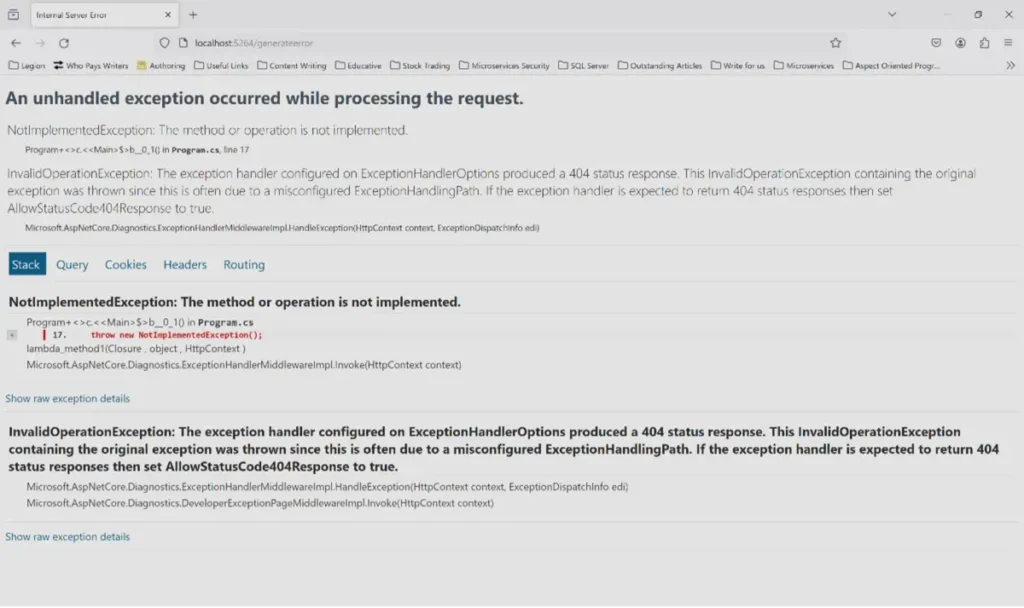


    For example, you can create a middleware that leverages the IExceptionHandler to catch exceptions globally and return custom error messages or error pages. This middleware can be added to the request processing pipeline in the Startup.cs or Program.cs file, ensuring that all unhandled exceptions are caught and processed in a standardized way.

    Furthermore, integrating IExceptionHandler with logging services such as Serilog or NLog allows developers to log detailed error information, which can be invaluable for debugging and monitoring purposes. With detailed logs and structured exception handling, maintaining and scaling ASP.NET Core applications becomes more manageable.

    Overall, the IExceptionHandler interface is a powerful addition to ASP.NET Core 8, offering a more elegant approach to exception management. By adopting this new feature, developers can build more resilient applications that provide clear feedback to users and maintain cleaner, more maintainable codebases.


    Post Views: 262
    java Programming Languages Software Development
    Share. Facebook Twitter Pinterest LinkedIn Tumblr Email
    mustafa efe
    • Website

    Related Posts

    Anthropic’s Claude Security Tool Analyzes Codebases to Detect Vulnerabilities and Prioritize Fixes

    Mayıs 1, 2026

    Microsoft’s Windows Insider Program Finally Becomes More Streamlined and User-Friendly

    Nisan 11, 2026

    Microsoft launches tool to gather user feedback on Windows issues

    Nisan 8, 2026
    Add A Comment

    Comments are closed.

    Editors Picks
    8.5

    Apple Planning Big Mac Redesign and Half-Sized Old Mac

    Ocak 5, 2021

    Autonomous Driving Startup Attracts Chinese Investor

    Ocak 5, 2021

    Onboard Cameras Allow Disabled Quadcopters to Fly

    Ocak 5, 2021
    Top Reviews
    9.1

    Review: T-Mobile Winning 5G Race Around the World

    By sevketayaksiz
    8.9

    Samsung Galaxy S21 Ultra Review: the New King of Android Phones

    By sevketayaksiz
    8.9

    Xiaomi Mi 10: New Variant with Snapdragon 870 Review

    By sevketayaksiz
    Advertisement
    Demo
    Şevket Ayaksız
    Facebook X (Twitter) Instagram YouTube
    • Home
    • Adobe
    • microsoft
    • java
    • Oracle
    • Contact
    © 2026 Theme Designed by Şevket Ayaksız.

    Type above and press Enter to search. Press Esc to cancel.