

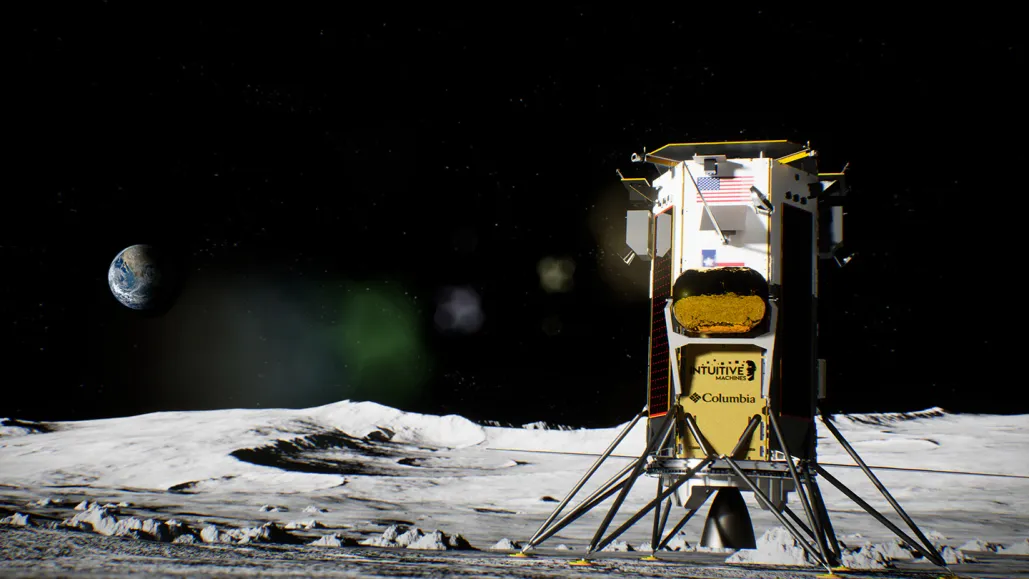
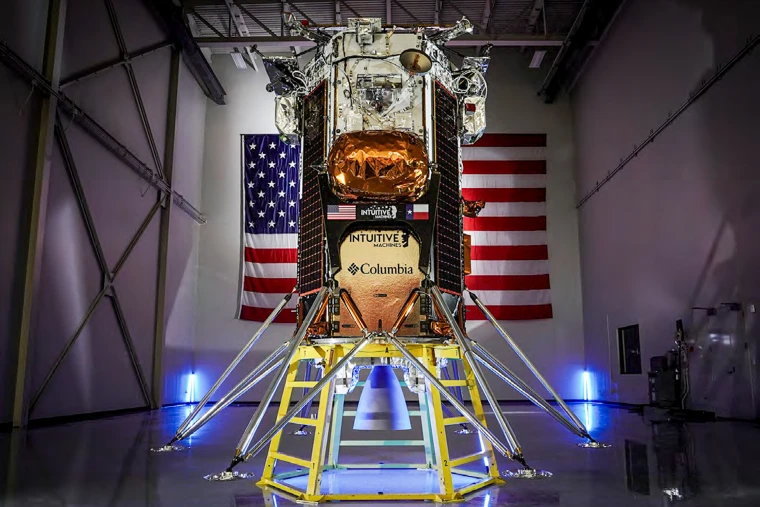
 In a groundbreaking return to lunar exploration, NASA, in partnership with commercial companies, achieved the first moon landing since 1972 in February 2024. The Commercial Lunar Payload Services program (CLPS) heralds a paradigm shift, where private enterprises take the lead in designing, building, and operating uncrewed landers for scientific experiments on the moon, marking a departure from NASA’s traditional role.
The CLPS program’s initial missions include the Astrobotics payload and the Intuitive Machines payload, with their landers Peregrine and Odysseus. These ventures are set to revolutionize lunar exploration, with NASA as a customer rather than the sole driver, opening up new possibilities for scientific endeavors.
Among the scientific projects embarked upon, the Radiowave Observations at the Lunar Surface of the photoElectron Sheath (ROLSES) program stands out. As part of the CLPS initiative, ROLSES landed on the moon in February 2024, paving the way for NASA’s first radio telescopes on the lunar surface by 2026.
The moon’s unique characteristics, particularly its far side, offer an ideal environment for radio astronomy. With no ionosphere and minimal interference, the moon becomes a pristine canvas for studying signals from celestial objects like the sun and the Milky Way. ROLSES, equipped with a low-frequency radio telescope, will collect crucial data about the lunar environment, focusing on solar wind interactions with the moon’s surface.
The absence of a global magnetic field on the moon makes it susceptible to charged gas, creating a plasma when struck by solar wind. Understanding these phenomena is critical for ensuring astronaut safety during lunar missions. ROLSES also aims to examine the sun, measure low-frequency radio emissions, and explore radio emissions from exoplanets, utilizing the moon as a template for extraterrestrial observations.
Looking ahead, the Lunar Surface Electromagnetic Experiment at Night (LuSEE-Night), set for an early 2026 mission to the moon’s far side, signifies a historic collaboration between NASA and the Department of Energy. This mission, enabled by the moon’s unique radio quietness during lunar nights, promises to unlock the mysteries of the dark ages—the epoch preceding the formation of the first stars and galaxies in the universe. LuSEE-Night will delve into fundamental physics, cosmology, and explore the nature of dark matter and early dark energy, marking a significant leap in our understanding of the universe’s unexplored cosmic epochs.