

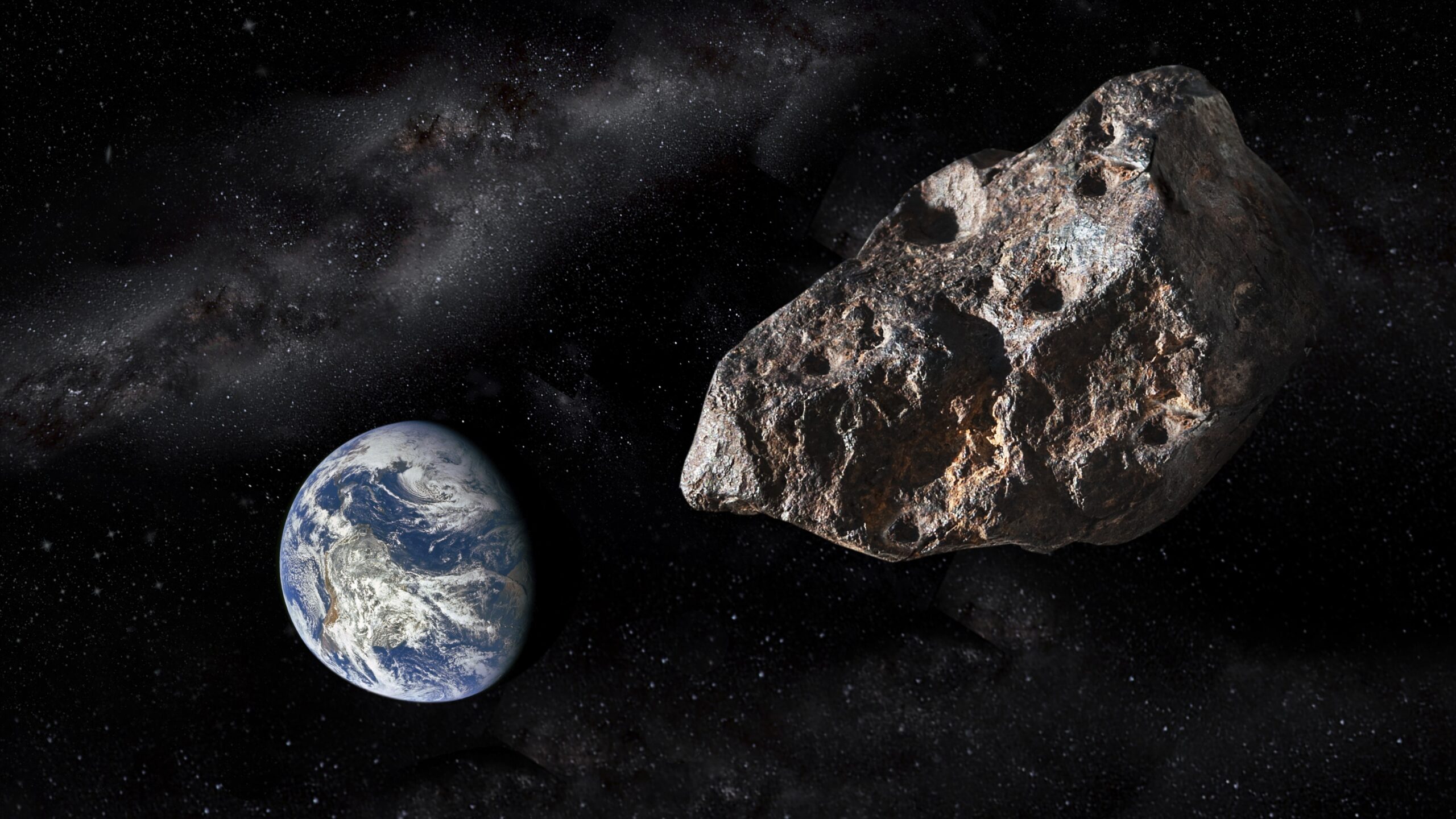
Astronomers monitoring near-Earth objects have shifted their focus to the asteroid 2024 YR4, an Apollo-class body once thought to pose a risk to Earth itself. While updated trajectories now rule out a direct collision with our planet, a new threat has emerged: a potential impact with the moon. Current projections place the probability of a lunar strike at about 4 percent, with December 2032 identified as the earliest possible date of impact.
Such an event could carry profound implications for Earth. A lunar collision would unleash enormous amounts of rock and dust, ejecting material into surrounding space. To observers on the ground, it might appear as a brilliant meteor storm, but for orbiting satellites and crewed missions like the ISS, the debris could present significant hazards. Recognizing this, NASA has already begun investigating options for intervention.
The agency is weighing two possible courses of action: asteroid deflection or nuclear destruction. Deflection would require a detailed understanding of the asteroid’s mass, which may vary by several orders of magnitude. A reconnaissance probe would therefore be essential, but time is limited—any mission would need to launch no later than 2028 to allow for effective countermeasures. Destruction, meanwhile, could be achieved with a one-megaton nuclear device, powerful enough to shatter the asteroid into fragments too small to pose a major threat. While such a blast would be 80 times stronger than the Hiroshima bomb, it would still pale in comparison to Cold War-era weapons like the Tsar Bomba.
However, deploying nuclear arms in space brings its own set of dangers. The Starfish Prime test of 1962 demonstrated how even controlled detonations can damage satellites and disrupt communications. An explosion near the moon could have unpredictable and far-reaching consequences. For now, astronomers stress patience: it will take years before scientists can say with confidence whether 2024 YR4 is truly on a collision course. Until then, NASA faces the challenge of preparing for the worst while hoping that nature spares us from a lunar catastrophe.