

Close Menu
Şevket Ayaksız

    Subscribe to Updates

    Get the latest creative news from FooBar about art, design and business.

    What's Hot

    Google Maps vs Waze: I Put the Two Best Navigation Apps Head-to-Head — and One Clearly Came Out on Top

    Mayıs 1, 2026

    Samsung Electronics Offers Free 32-Inch Odyssey gaming monitor: Eligibility and How to Claim Deal

    Mayıs 1, 2026

    T-Mobile Bundles Free Hulu and Netflix for 5G Users: Eligibility Explained

    Mayıs 1, 2026
    Facebook X (Twitter) Instagram
    • software
    • Gadgets
    Facebook X (Twitter) Instagram
    Şevket AyaksızŞevket Ayaksız
    Subscribe
    • Home
    • Technology

      Google Maps vs Waze: I Put the Two Best Navigation Apps Head-to-Head — and One Clearly Came Out on Top

      Mayıs 1, 2026

      T-Mobile Bundles Free Hulu and Netflix for 5G Users: Eligibility Explained

      Mayıs 1, 2026

      This Portable Mini PC Is the Unexpected Raspberry Pi Alternative You Might Actually Want

      Mayıs 1, 2026

      Samsung warns RAM shortages could worsen beyond 2027

      Mayıs 1, 2026

      Oxford study finds friendly AI chatbots are less accurate

      Mayıs 1, 2026
    • Adobe
    • Microsoft
    • java
    • Oracle
    Şevket Ayaksız
    Anasayfa » Svelte 5 Reaches Release Candidate Status
    software

    Svelte 5 Reaches Release Candidate Status

    By mustafa efeAğustos 18, 2024Yorum yapılmamış3 Mins Read
    Facebook Twitter Pinterest LinkedIn Tumblr Email
    Share
    Facebook Twitter LinkedIn Pinterest Email

    Svelte 5 Advances with Runes: A Step Closer to Stable Release

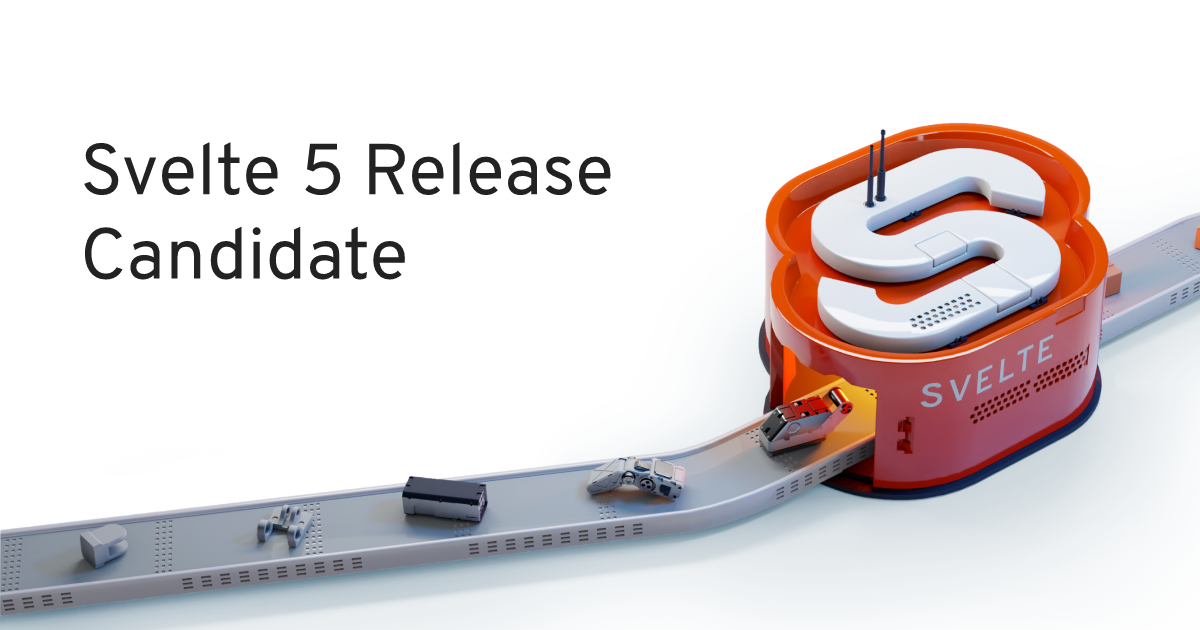
    Svelte 5 has officially entered the release candidate phase, marking a significant milestone in the evolution of this popular reactive UI framework. This phase indicates that the framework is nearly ready for its stable release, with no major breaking changes anticipated. Developers can expect a smooth transition from the current version to Svelte 5, with stability and performance improvements as key features.

    Announced on April 30, the release candidate introduces a series of notable enhancements designed to streamline development and boost performance. Central to this update is Runes, a new signal-powered reactivity API. Runes aims to deliver universal, fine-grained reactivity, allowing for more dynamic and responsive user interfaces. The Svelte team highlights this as a major advancement that will significantly enhance how developers manage state and reactivity within their applications.

    In addition to Runes, Svelte 5 brings several other improvements. The event handling system has been overhauled to offer greater flexibility and reduce the amount of boilerplate code required. This change is expected to simplify event management and make it more intuitive for developers. Component composition has also been improved with new snippets, streamlining the process of creating and managing complex components.



    Another key feature of Svelte 5 is native TypeScript support, now available even within markup. This enhancement allows developers to leverage TypeScript’s type-checking capabilities directly in their Svelte components, improving code quality and reducing runtime errors. While components from Svelte 4 will still be compatible, it is important to note that Svelte 5 no longer uses class-based components. The framework has shifted to a more modern approach, which means that some features from Svelte 4 will eventually be deprecated in favor of newer alternatives.

    To start using Svelte 5, developers can initialize a new SvelteKit project with the following command: npm create svelte@latest. This will set up a project using the latest version of Svelte, including all the features and improvements introduced in Svelte 5. The Svelte team has also provided additional methods for accessing the new version, which are detailed in the release bulletin.

    Svelte continues to differentiate itself from other reactive UI frameworks by offering a declarative approach to application development. With Svelte, developers build applications using components that integrate markup, behavior, and styles into cohesive JavaScript modules. This approach minimizes the overhead typically associated with UI frameworks, resulting in more efficient and performant applications. SvelteKit, a compatible framework, further supports developers in creating robust applications with Svelte 5.

    Post Views: 249
    java Programming Languages Software Development
    Share. Facebook Twitter Pinterest LinkedIn Tumblr Email
    mustafa efe
    • Website

    Related Posts

    Anthropic’s Claude Security Tool Analyzes Codebases to Detect Vulnerabilities and Prioritize Fixes

    Mayıs 1, 2026

    Microsoft’s Windows Insider Program Finally Becomes More Streamlined and User-Friendly

    Nisan 11, 2026

    Microsoft launches tool to gather user feedback on Windows issues

    Nisan 8, 2026
    Add A Comment

    Comments are closed.

    Editors Picks
    8.5

    Apple Planning Big Mac Redesign and Half-Sized Old Mac

    Ocak 5, 2021

    Autonomous Driving Startup Attracts Chinese Investor

    Ocak 5, 2021

    Onboard Cameras Allow Disabled Quadcopters to Fly

    Ocak 5, 2021
    Top Reviews
    9.1

    Review: T-Mobile Winning 5G Race Around the World

    By sevketayaksiz
    8.9

    Samsung Galaxy S21 Ultra Review: the New King of Android Phones

    By sevketayaksiz
    8.9

    Xiaomi Mi 10: New Variant with Snapdragon 870 Review

    By sevketayaksiz
    Advertisement
    Demo
    Şevket Ayaksız
    Facebook X (Twitter) Instagram YouTube
    • Home
    • Adobe
    • microsoft
    • java
    • Oracle
    • Contact
    © 2026 Theme Designed by Şevket Ayaksız.

    Type above and press Enter to search. Press Esc to cancel.