

Close Menu
Şevket Ayaksız
    What's Hot

    AI watermarks could improve transparency but won’t stop AI slop

    Eylül 13, 2026

    LG’s 4K OLED gaming monitor gets a $600 discount

    Eylül 13, 2026

    Keychron’s 100-key macropad offers 8,000Hz polling for $65

    Eylül 13, 2026
    • software
    • Gadgets
    Şevket AyaksızŞevket Ayaksız
    • Home
    • Technology

      Apple: iPhone 17 and Older Models Hit With Unexpected $100 Price Increase

      Eylül 10, 2026

      Apple Watch Intelligence Could Be a Major Accessibility Breakthrough

      Eylül 10, 2026

      Apple May Skip the Base iPhone 18 This Year

      Eylül 10, 2026

      FCC changes robot vacuum rules, potentially affecting future models

      Ağustos 8, 2026

      Samsung’s new 2TB 990 SSD drops to its lowest price yet

      Ağustos 6, 2026
    • Adobe

      Adobe brings four key creative apps to Windows on Arm beta

      Ağustos 1, 2025

      Skip the Legal Jargon—Adobe Acrobat’s AI Reads Contracts for You

      Şubat 5, 2025

      Save 50% on a Top-Rated Adobe Alternative This Black Friday

      Kasım 30, 2024

      Save 50% on Adobe’s Creative Cloud This Black Friday

      Kasım 25, 2024

      Adobe Brings Generative AI to Premiere Pro for Smarter Video Editing

      Ekim 24, 2024
    • Microsoft

      Microsoft quietly removes Windows 11’s 32GB RAM recommendation

      Ağustos 6, 2026

      Microsoft aims to improve Windows 11 performance on 8GB PCs

      Ağustos 2, 2026

      Microsoft PowerToys remains an essential Windows utility

      Temmuz 31, 2026

      Microsoft says Windows Secure Boot certificate rollout is still in progress

      Temmuz 30, 2026

      Microsoft tests Windows Update changes after major outage

      Temmuz 29, 2026
    • java

      Optimizing Java Streams for High-Performance Applications

      Aralık 20, 2025

      AI Brings a New Spark to JavaScript Programming

      Kasım 9, 2025

      Revisiting the Spring Framework: What’s New and Why It Still Matters

      Kasım 9, 2025

      Top Highlights and Features to Watch in Java 25

      Kasım 3, 2025

      Mastering Java Cold Starts: Achieving High-Performance Serverless with GraalVM and Spring

      Kasım 3, 2025
    • Oracle

      JavaScript Community Pushes Back Against Oracle’s Trademark Claim

      Şubat 8, 2025

      Understanding the Impact of the Google vs. Oracle Decision

      Aralık 25, 2024

      Google Wins Legal Battle Over Java, Oracle Continues to Resist

      Aralık 25, 2024

      Oracle Unveils Verrazzano: A New Container Platform for Kubernetes

      Aralık 12, 2024

      Oracle vs. Google: Implications of the Verdict on Open Source Software

      Aralık 8, 2024
    Şevket Ayaksız
    Anasayfa » What is Tomcat? The Original Java Servlet Container
    software

    What is Tomcat? The Original Java Servlet Container

    By mustafa efeTemmuz 20, 2024Yorum yapılmamış3 Mins Read
    Facebook Twitter Pinterest LinkedIn Tumblr Email
    Share
    Facebook Twitter LinkedIn Pinterest Email

    Everything you need to know about Tomcat: The high-availability Java and Jakarta EE application server for servlets, JSP, and WebSockets.

    Apache Tomcat is a long-standing, open-source Java servlet container known for its robust implementation of core Java enterprise specifications. Initially released by the Apache Software Foundation in 1998, Tomcat was introduced just four years after the inception of Java itself. It was originally designed as the reference implementation for the Java Servlet API and JavaServer Pages (JSP) specification. Over the years, it has evolved into a widely used application server with a reputation for stability and extensibility.

    Tomcat and Jakarta EE

    Tomcat’s evolution reflects the broader changes in Java enterprise technologies. Originally based on Java EE (Enterprise Edition), Tomcat has transitioned to the Jakarta EE specification. Tomcat 9 and earlier versions were aligned with Java EE, while Tomcat 10 and subsequent releases conform to the Jakarta EE standards. This shift is significant due to the change in package names from javax.* to jakarta.*. The current version, as of this writing, is Tomcat 10.0.23, which supports this updated package naming convention.

    Tomcat’s Role and Functionality

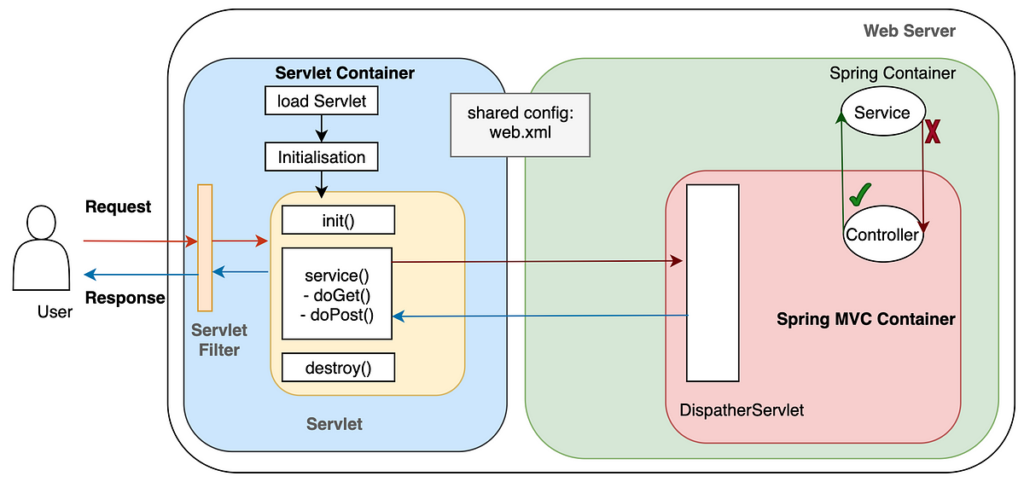
    Tomcat serves as both a servlet container and a web server. In its role as a servlet container, Tomcat implements the Jakarta Servlet specification, which is essential for hosting servlets. Servlets are Java programs that run on a server and handle client requests and responses. Tomcat also supports the Jakarta Server Pages (JSP) specification, enabling the creation of dynamic web content using JSP technology.

    While Tomcat can function as a web server by serving static files from the local system, its primary role is to act as a servlet container. It differs from a full Java EE application server, which typically provides a more extensive set of features, including EJBs (Enterprise JavaBeans) and JPA (Java Persistence API). Tomcat focuses on providing a reliable environment for servlets and JSPs, often integrating with other tools to deliver additional functionality.


    Deployment and Usage

    Tomcat supports several methods for deploying Java applications. Developers can deploy applications using WAR (Web Application Archive) files, which encapsulate all the components of a web application. Tomcat also allows for the deployment of exploded directories, which are directories containing the unarchived files of a WAR. Another deployment method is through the Tomcat Manager application, which provides a web interface for managing applications and server settings.

    Advantages of Tomcat

    One of Tomcat’s key advantages is its simplicity and ease of use. It offers a lightweight solution for hosting Java web applications, which is particularly appealing for projects that do not require the full breadth of Java EE features. Tomcat’s extensive documentation, active community, and regular updates contribute to its popularity and reliability. It is often chosen for its performance, scalability, and the ability to integrate seamlessly with various development tools and frameworks.

    Conclusion

    In summary, Apache Tomcat remains a pivotal component of the Java ecosystem, providing a tried-and-true environment for running Java web applications. Its transition from Java EE to Jakarta EE reflects the ongoing evolution of Java technologies. Whether used as a servlet container or in conjunction with other tools for a more comprehensive application server environment, Tomcat continues to be a vital resource for developers in the Java community.


    Post Views: 370
    java Programming Languages Software Development
    Share. Facebook Twitter Pinterest LinkedIn Tumblr Email
    mustafa efe
    • Website

    Related Posts

    AI watermarks could improve transparency but won’t stop AI slop

    Eylül 13, 2026

    Google lets Gemini users remove visible watermarks from AI images and videos

    Eylül 13, 2026

    OpenAI removes ChatGPT text chat limits for free and Go users

    Ağustos 8, 2026
    Add A Comment

    Comments are closed.

    Editors Picks
    8.5

    Apple Planning Big Mac Redesign and Half-Sized Old Mac

    Ocak 5, 2021

    Autonomous Driving Startup Attracts Chinese Investor

    Ocak 5, 2021

    Onboard Cameras Allow Disabled Quadcopters to Fly

    Ocak 5, 2021
    Top Reviews
    9.1

    Review: T-Mobile Winning 5G Race Around the World

    By sevketayaksiz
    8.9

    Samsung Galaxy S21 Ultra Review: the New King of Android Phones

    By sevketayaksiz
    8.9

    Xiaomi Mi 10: New Variant with Snapdragon 870 Review

    By sevketayaksiz
    Advertisement
    Demo
    Şevket Ayaksız
    Instagram
    • Home
    • Adobe
    • microsoft
    • java
    • Oracle
    • Contact
    © 2026 Theme Designed by Şevket Ayaksız.

    Type above and press Enter to search. Press Esc to cancel.