

Close Menu
Şevket Ayaksız

    Subscribe to Updates

    Get the latest creative news from FooBar about art, design and business.

    What's Hot

    Google Maps vs Waze: I Put the Two Best Navigation Apps Head-to-Head — and One Clearly Came Out on Top

    Mayıs 1, 2026

    Samsung Electronics Offers Free 32-Inch Odyssey gaming monitor: Eligibility and How to Claim Deal

    Mayıs 1, 2026

    T-Mobile Bundles Free Hulu and Netflix for 5G Users: Eligibility Explained

    Mayıs 1, 2026
    Facebook X (Twitter) Instagram
    • software
    • Gadgets
    Facebook X (Twitter) Instagram
    Şevket AyaksızŞevket Ayaksız
    Subscribe
    • Home
    • Technology

      Google Maps vs Waze: I Put the Two Best Navigation Apps Head-to-Head — and One Clearly Came Out on Top

      Mayıs 1, 2026

      T-Mobile Bundles Free Hulu and Netflix for 5G Users: Eligibility Explained

      Mayıs 1, 2026

      This Portable Mini PC Is the Unexpected Raspberry Pi Alternative You Might Actually Want

      Mayıs 1, 2026

      Samsung warns RAM shortages could worsen beyond 2027

      Mayıs 1, 2026

      Oxford study finds friendly AI chatbots are less accurate

      Mayıs 1, 2026
    • Adobe
    • Microsoft
    • java
    • Oracle
    Şevket Ayaksız
    Anasayfa » When to use abstract classes vs. interfaces in Java
    software

    When to use abstract classes vs. interfaces in Java

    By mustafa efeTemmuz 4, 2024Yorum yapılmamış2 Mins Read
    Facebook Twitter Pinterest LinkedIn Tumblr Email
    Share
    Facebook Twitter LinkedIn Pinterest Email

    Abstract Classes and Interfaces in Java: Understanding Their Differences

    Understanding Abstract Classes and Interfaces in Java

    Abstract classes and interfaces are foundational elements in Java programming, each serving distinct purposes within software design and development. While they share similarities, such as supporting abstraction and defining contracts, their usage and capabilities differ significantly.

    The Role of Interfaces in Java

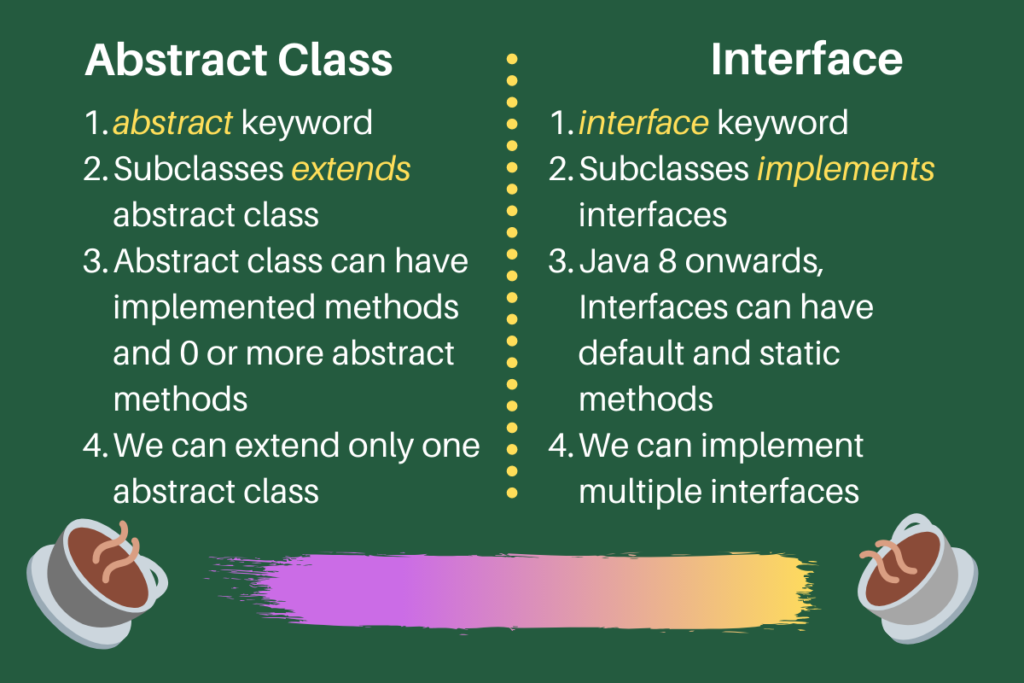
    Interfaces in Java define a contract that concrete classes must implement. They consist solely of method signatures without implementations and cannot contain instance variables, except for constants. Interfaces promote code decoupling and facilitate polymorphism, enabling classes to exhibit different behaviors through a common interface.

    When to Use Interfaces in Java

    Interfaces are invaluable when designing frameworks or libraries where multiple implementations are expected. For instance, the JDK’s List interface allows diverse implementations like ArrayList and LinkedList, ensuring flexibility and interoperability across different data structures.

    The Essence of Abstract Classes

    Abstract classes, unlike interfaces, can contain both abstract methods—methods without implementations—and concrete methods. They serve as partial blueprints for subclasses to extend and provide common functionality. Abstract classes cannot be instantiated directly but are intended to be subclassed to implement specific behaviors.
    Overriding Methods in Interfaces and Abstract Classes

    In interfaces, methods are implicitly public and abstract, requiring concrete classes to provide implementations. In contrast, abstract classes can have both abstract and non-abstract methods, offering flexibility in defining shared functionalities that subclasses can override or inherit.

    Constants and Default Methods

    Interfaces support constants (final variables) and default methods—methods with implementations—added in Java 8. Default methods enable backward compatibility by allowing interfaces to evolve without breaking existing implementations, enhancing code extensibility.

    Conclusion

    Choosing between interfaces and abstract classes in Java depends on the specific requirements of your design. Interfaces excel in defining contracts and promoting polymorphism, while abstract classes provide structure and reusable implementations for related subclasses. Understanding these distinctions empowers developers to leverage Java’s object-oriented features effectively in building scalable and maintainable software solutions.

    Post Views: 301
    java Programming Languages Software Development
    Share. Facebook Twitter Pinterest LinkedIn Tumblr Email
    mustafa efe
    • Website

    Related Posts

    Anthropic’s Claude Security Tool Analyzes Codebases to Detect Vulnerabilities and Prioritize Fixes

    Mayıs 1, 2026

    Microsoft’s Windows Insider Program Finally Becomes More Streamlined and User-Friendly

    Nisan 11, 2026

    Microsoft launches tool to gather user feedback on Windows issues

    Nisan 8, 2026
    Add A Comment

    Comments are closed.

    Editors Picks
    8.5

    Apple Planning Big Mac Redesign and Half-Sized Old Mac

    Ocak 5, 2021

    Autonomous Driving Startup Attracts Chinese Investor

    Ocak 5, 2021

    Onboard Cameras Allow Disabled Quadcopters to Fly

    Ocak 5, 2021
    Top Reviews
    9.1

    Review: T-Mobile Winning 5G Race Around the World

    By sevketayaksiz
    8.9

    Samsung Galaxy S21 Ultra Review: the New King of Android Phones

    By sevketayaksiz
    8.9

    Xiaomi Mi 10: New Variant with Snapdragon 870 Review

    By sevketayaksiz
    Advertisement
    Demo
    Şevket Ayaksız
    Facebook X (Twitter) Instagram YouTube
    • Home
    • Adobe
    • microsoft
    • java
    • Oracle
    • Contact
    © 2026 Theme Designed by Şevket Ayaksız.

    Type above and press Enter to search. Press Esc to cancel.