


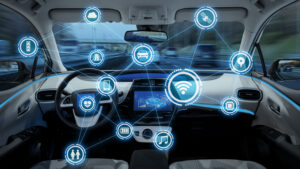
Modern vehicles come equipped with sophisticated in-car monitoring systems that go beyond tracking speed and lane position. These systems include cameras and sensors designed to monitor the driver’s cabin, eye movements, and various driving parameters. The collected data is utilized to enhance safety, comfort, and convenience during the ride. For instance, cameras can detect driver distraction and prompt a return to focus on the road, while sensors verify speed limits and warn against speeding. Some automakers are integrating facial or fingerprint recognition for unlocking cars, adding a layer of convenience. However, this data is not confined to the vehicle, as manufacturers often transmit it to their data centers to improve services and personalize user experiences.
While these monitoring systems offer tangible benefits, they also raise significant privacy concerns. The data collected, capable of revealing driving habits, locations, and even a driver’s identity, poses a potential privacy nightmare. Reports, including one by the Mozilla Foundation, criticize automakers for having lax privacy policies, labeling cars as the “worst category of products for privacy.” U.S. Senator Ed Markey has raised questions about data practices in a letter addressed to U.S. automakers, emphasizing the need for transparency and robust privacy measures.
The evolving landscape of smart cars presents a trade-off between convenience and privacy for drivers. As a cybersecurity researcher specializing in transportation resilience, I explore potential technological solutions to navigate this trade-off. Present-day vehicles rely on an array of sensors, some indirectly related to a specific person (e.g., brake pedal position) and others directly linked to the driver (e.g., facial recognition cameras predicting fatigue). Protecting privacy becomes crucial when dealing with the latter, as it involves personally identifiable information.
One approach to strike a balance involves federated machine learning, a concept gaining attention in the last seven years. This method allows algorithms to learn from local device data without transferring it to a central server. Google’s Gboard keyboard utilizes federated learning to enhance predictive typing without compromising user data. Recent research explores the application of blockchain-based federated machine learning to improve privacy and security, potentially safeguarding drivers’ data.
Despite the inherent trade-off, advancements in privacy-preserving data analytics techniques offer hope. Location obfuscation, altering the user’s location data to prevent identification, is one such technique. By adopting these methods, drivers could potentially enjoy the benefits of modern car services and features without sacrificing their privacy to an unacceptable extent. The quest for striking the right balance between user privacy and service quality in the automotive industry continues as technology evolves.