


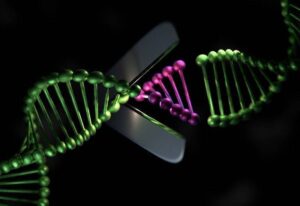
 The year 2023 was the year that CRISPR gene editing left the laboratory and entered the public consciousness and the American medical system. The Food and Drug Administration recently approved the first gene-editing CRISPR therapy, Casgevy (or exa-cel), a treatment from CRISPR Therapeutics and its partner Vertex, for patients with sickle cell disease. This comes on the heels of a similar green light from UK regulators in a historic moment for a gene-editing technology whose foundations were laid in the 1980s and which eventually won pioneering CRISPR scientists Jennifer Doudna and Emmanuelle Charpentier the 2020 Nobel Prize in Chemistry. .
The decades-long gap between the initial scientific spark, widespread academic recognition, and the entry into the market of a potential treatment for blood disorders such as sickle cell disease, which now affects hundreds of thousands of people worldwide, is telling. While the past is a prelude, even the newer CRISPR gene-editing approaches being studied today have the potential to treat diseases ranging from cancer and muscular dystrophy to heart disease, and to breed more resilient livestock and plants that can cope with climate change and new strains of deadly viruses.
With new CRISPR discoveries, especially driven by artificial intelligence, “we can expand the existing toolbox for gene editing, which is crucial for therapeutic, diagnostic and research applications.” . . but it’s also a great way to better understand the broad diversity of microbial defense mechanisms,” Feng Zhang, another CRISPR pioneer, a molecular biologist and core member of the Broad Institute of MIT and Harvard, said in an emailed statement to Fast Company.
These defense mechanisms, which bacteria use to fend off hostile pathogens such as viruses by cutting their DNA and mounting an immune response, form the basis of modified CRISPR gene editing systems, such as the CRISPR-Cas9 system Casgevy uses to cut defective genes. Genes that cause sickle cell disease. But this is a single example of CRISPR. Numerous others, from those already tested in the clinic to those not yet identified by bacteria in different environments, may provide scientists with new ways to edit genes for medical, agricultural or industrial use.
“The Cas9 system, which is the most advanced system in terms of clinical applications, is just one of many different CRISPR systems. Each has unique properties that can be useful in different applications,” said Zhang.
This is where AI can provide an algorithmic boost to researchers. In November, Zhang and a team of scientists at the Broad Institute, the McGovern Institute for Brain Research at the Massachusetts Institute of Technology, and the National Center for Biotechnology Information at the National Institutes of Health announced they had discovered a “treasure trove.” new types of CRISPR systems. The researchers used an algorithm called Fast Locality-Sensitive Hashing-based clustering (FLSHclust) to scan genomic databases of bacteria found everywhere, from breweries to mines to dog saliva. They identified 188 types of rare, previously undiscovered CRISPR systems in bacteria that have the potential to promote safer, more targeted and precise gene editing methods in human medicine and beyond.
“One of the important lessons we learned from this study is the importance of biodiversity,” Zhang said. “The new systems we found came from environmental samples from around the world. We discovered a lot of new, exciting biology within these samples, and hopefully the seeds of powerful future tools and treatments.”